How to come up with LinkedIn content
October 17, 2026 · Bradley Jacobs
Get your free LinkedIn positioning in 60 seconds — drop your handle:
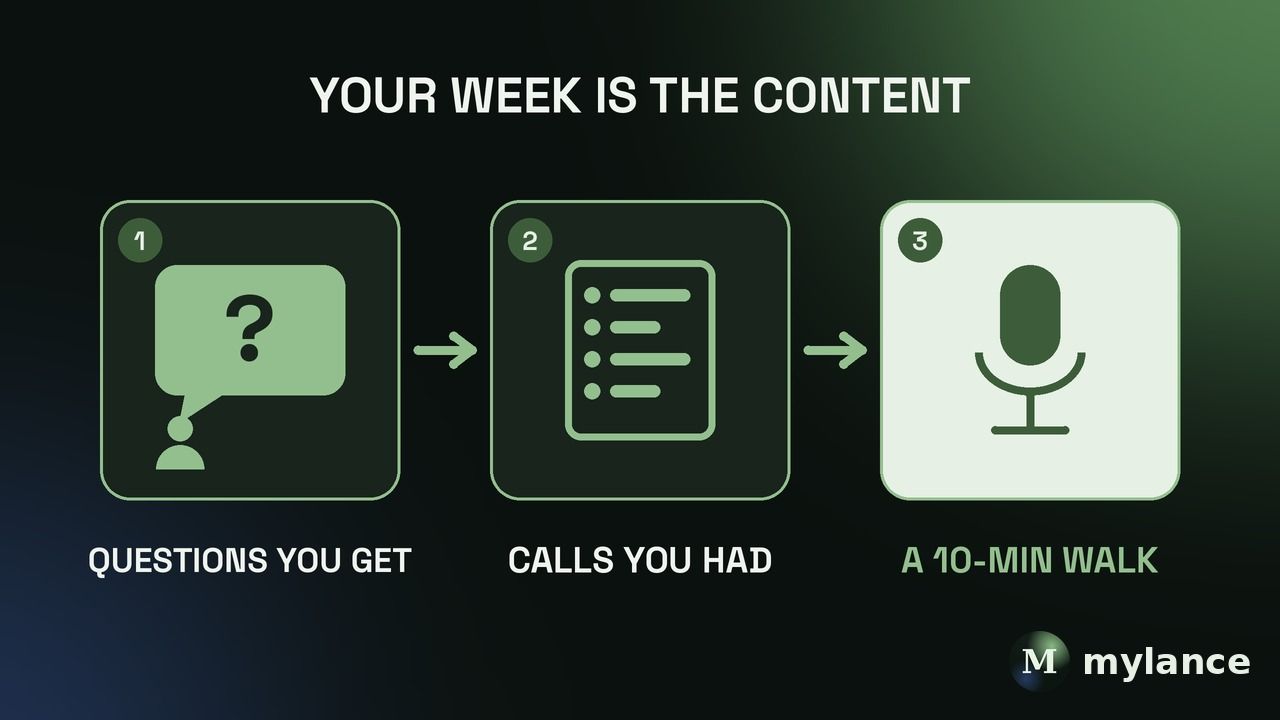
Pull it from your own week. The best LinkedIn content comes from questions people asked you, calls you had, and things you'd explain to a friend over coffee. You don't need a content calendar full of clever topics. You need a habit of noticing what already happened and writing that down.
I've posted on LinkedIn nearly every day for about six years. I don't sit down and brainstorm from scratch. Almost every post starts from something real: a conversation, a question, a podcast I recorded, or a story from running the business.
Mylance is a LinkedIn content system that turns what you know and do into LinkedIn posts that sound like you.
Where do good LinkedIn content ideas come from?
They come from your work, not from a list of trending topics. Your wins, your mistakes, what you're learning, the problems your customers keep running into, and the way you think about your field. That's the stuff nobody else can copy.
You can have the same idea as 20 other people on LinkedIn. What makes yours worth reading is the specific detail only you have: the client situation, the number, the thing you got wrong the first time. Generic topics come out generic. Real moments come out sounding like you.
How do I turn questions into posts?
Write about the specific moment someone asked you something. If a customer, a prospect, or a peer asked you a question this week, that's a post. Answer it the way you answered them, and start with the moment they asked.
This works because the question is already proven. A real person cared enough to ask it, so other people like them are probably wondering the same thing. Keep a running note on your phone and add every good question the day you hear it. By Friday you'll have more than you can post.
Can I use my calls and meetings for content?
Yes, and it's one of the best sources you have. Your calls are full of the way you actually explain things, the examples you reach for, and the questions people really ask.
Here's what I do. Before I write my newsletter, I have AI pull my last 15 recorded calls and suggest a topic based on what kept coming up in those conversations. It's never a topic I would have invented sitting at my desk. It's what people are actually talking to me about that week.
Only use calls you're comfortable drawing from, and strip out anything private. You're pulling the lesson and the way you explained it, not quoting the client.
What if I don't have calls or a podcast to pull from?
Take yourself on a walk and talk into a voice transcriber. Spend 10 minutes, or 20 if you're on a roll, talking about things you've done, what you saw, what worked, and how you got into this business. That transcript is your raw material.
It's not going to be perfect. You can always go back in and clean it up. But talking is a lot easier than staring at a blank post box, and it sounds more like you because it literally is you.
If you do have a podcast, use it hard. My editor chops one episode into short pieces across LinkedIn and every other channel, and we end up with something like 50 pieces of content from one conversation. Even if your podcast only gets a dozen listeners, one episode as your top content pillar goes a long way. The transcript also becomes my newsletter, and then I turn it into posts.
Why is it so hard to come up with LinkedIn content?
Usually it isn't a shortage of ideas. It's doubt. Some people have their ideas written down and some don't. Some know a story is worth sharing and some aren't sure. A lot of people don't know how to share what they know without it feeling cringy or self-promotional.
There's an emotional piece here. If someone tells you what to post and tells you it's okay, you're a lot more likely to post it. Left to your own devices, you might just not, because you're scared of being judged. So give yourself permission. Your experience is worth sharing.
If that's the part holding you back, I wrote about how to post on LinkedIn without being cringe and how to start posting on LinkedIn.
How many ideas do I need each week?
About three. I'd argue for at least three posts a week, because most of your followers are probably only seeing one of them. Three real moments a week is very doable once you're looking for them.
And a well-told quick story post doesn't take long once you have the moment. It's more like five or ten minutes than an hour. More on cadence in how often to post on LinkedIn.
FAQ
How do I come up with LinkedIn content ideas every day?
Keep a running list of questions you get, moments from calls, and small lessons from your week. Pick from the list instead of starting fresh each morning.
Can I use ChatGPT to come up with LinkedIn content ideas?
You can, but give it your material first: a call transcript, a voice memo, or a story. Ideas from a blank prompt come out generic. I covered this in can I use ChatGPT for LinkedIn posts.
What should a business owner post on LinkedIn?
What you know and what you do: customer problems you solve, how you think about your field, wins, mistakes, and lessons from running the business.
What if I run out of ideas?
Go back to your calls and your questions list. If those are empty, take a 10 minute walk and talk through the last month of work out loud.
What is Mylance?
Mylance is a LinkedIn content system that turns your real expertise into posts that sound like you. You bring ideas, customer stories, rough notes, transcripts, or podcasts. It helps you decide what to say, drafts in your voice, and learns from your edits. You stay in control of what goes out. More on that in how to write LinkedIn posts that sound like you.
Bottom line
Stop trying to invent LinkedIn content. Notice it. The questions you got, the calls you had, and a 10 minute walk talking out loud will give you more ideas than a brainstorm ever will, and they'll sound like you because they came from you.
Author: Bradley Jacobs. Published October 17, 2026. Updated October 17, 2026.