How to start posting on LinkedIn
October 5, 2026 · Bradley Jacobs
Get your free LinkedIn positioning in 60 seconds — drop your handle:
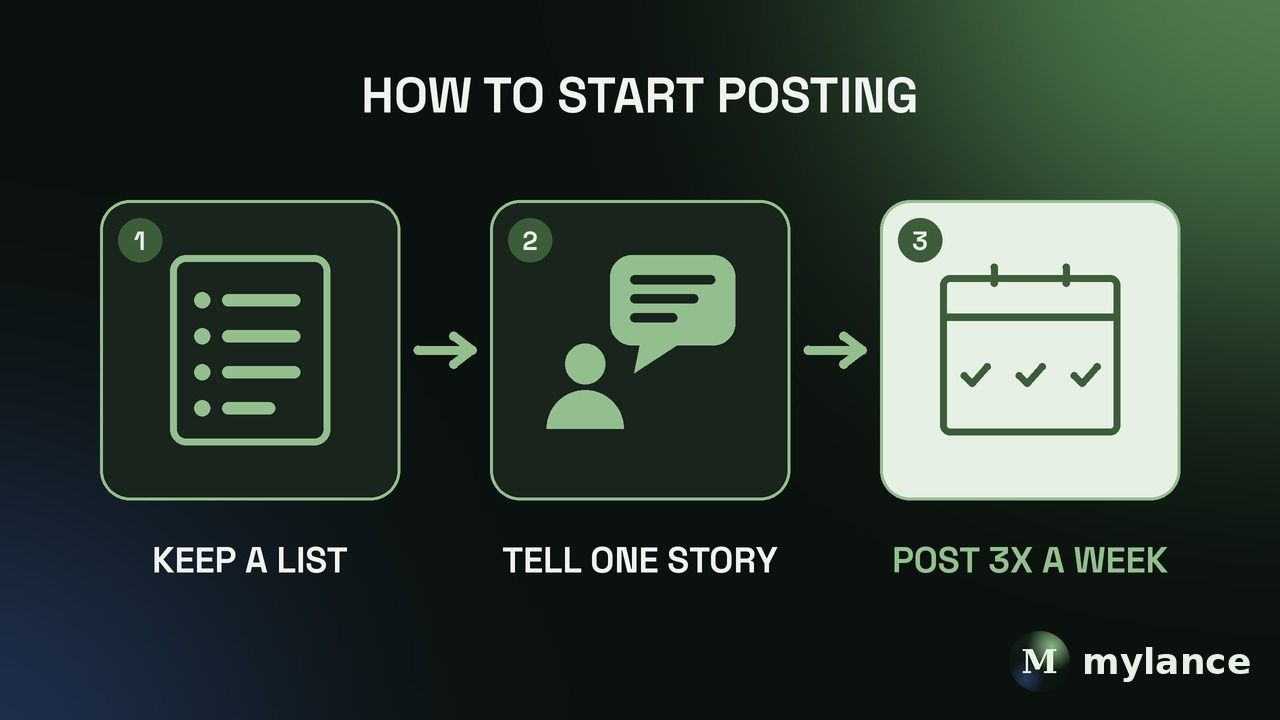
How to start posting on LinkedIn: keep a running list of things you've learned, wins, and mistakes from your actual work, turn one of them into a short first-person story, and hit post. Then do it again, at least three times a week. Don't wait until it's perfect. A bad first post barely gets seen. Never posting is what actually costs you.
That's honestly how I started. When I left my job, I wrote the normal goodbye post everyone writes. It got 46,000 impressions. I was like, wait, there's a lot more reach here than I ever considered. So I just started sharing what I was learning as I figured out consulting, the experiences, the mistakes I was making. People started commenting and reaching out for calls, so I kept doing it. I've posted pretty much every day for about six years now.
Mylance is a LinkedIn content system that turns what you know and do into LinkedIn posts that sound like you.
What should your first LinkedIn post be about?
Your first post should be one specific story from your own work: something you learned, a win, a mistake, or feedback that changed how you do things.
A lot of people tell me they have no idea what they would say. I tell them to forget about what they would say. Tell me about an experience you had. Where did you learn something? Where did something go wrong? That's the post.
You don't need a hot take or a big thought leadership idea. Everyone with a real business has a career full of wins, mistakes, feedback, and lessons. Sharing those genuinely is what makes you sound like you and not like every other expert in your space.
This is also why asking a chatbot "what should I post on LinkedIn?" goes nowhere. You get the same generic stuff everyone else is posting. The AI will make stuff up if you don't give it detail. Your detail is the whole point.
How do you come up with things to post on LinkedIn?
Keep a running list, and stop trying to come up with ideas on the spot.
Open the Notes app on your phone or computer. Every time something happens at work that taught you something, write one line. A question a client asked. A call that went sideways. The thing you explained for the fifth time this month. Don't write the post yet. Just capture it.
After a week you'll have more ideas than you can post. Most of the blank page problem goes away when you stop starting from a blank page.
How do you stop feeling cringe about posting on LinkedIn?
Post things that are useful to the reader, because the cringe feeling comes from posts that are all about you looking good.
When I run workshops and ask why people don't post, "cringey" is the word I hear the most. So I show them a post I wrote about my early Uber days. Uber and Lyft launched the same market on the same day. Six months later, Uber had 90% market share. I was on that launch team, and the post walks through what we actually did to win.
Then I ask the room if that post feels cringe, inauthentic, or like AI slop. Nobody says yes. It's a first-person, behind the scenes story you can't go search for anywhere else. That's the bar for your first post too. Not polished. Specific.
And nobody is judging your post as hard as you are. Your network isn't sitting there wondering if you used a tool, hired a writer, or wrote it at 6am. Our minds just like to think about how we'll be perceived.
What happens if your first LinkedIn posts flop?
Almost nobody sees them, and nothing bad happens.
My favorite thing to tell perfectionists: when you write a bad LinkedIn post that nobody likes, nobody sees it. Literally nobody sees it. I have 26,000 followers and I've still written posts that got about 100 impressions and zero likes. Nothing happened.
One or two bad posts don't hurt you. Never posting does, because you're not out there and your competitors are. Done is better than perfect. I say that as a recovering perfectionist.
How often should you post when you're just starting on LinkedIn?
Post at least three times a week, and if that feels like too much, start with two and build up.
Some people really fight me on three. It feels like a lot. But LinkedIn doesn't show every post to all your followers, not even close. Most of your network will see you maybe once a week. Three posts a week is how you actually show up for them.
Pick your days and stop deciding every morning. Our default for customers is Monday, Wednesday, Friday at 6am. Once the slots exist, the only question is which story from your list goes next.
FAQ
Do you need a lot of followers to start posting on LinkedIn?
No. Even big accounts don't reach most of their followers on any given post, and LinkedIn also shows posts to people outside your network. Start with whoever you're connected to today.
How long should your first LinkedIn post be?
Long enough to tell one story and land one lesson. If you're explaining three different ideas, that's three posts.
How much time does posting three times a week take?
Once your ideas are captured and you have a system drafting from them, scheduling three posts can take 20 to 30 minutes a week. Without that, most of the time goes to staring at a blank page.
Can you use AI to start posting on LinkedIn?
Yes, if it starts from your real stories and notes and you stay in control of what goes out. A generic prompt gets you a generic post. That gap is why Mylance learns from your own material and edits instead of guessing.
Bottom line
Starting on LinkedIn isn't a strategy deck. Write down what happens in your work. Turn one thing into a story. Post it before it's perfect. Do it again three times a week. My goodbye post that got 46,000 impressions wasn't clever. It was just real, and I hit post.
Author: Bradley Jacobs. Published October 5, 2026. Updated October 5, 2026.