Why Do All LinkedIn Posts Sound Like AI (And How to Fix It)
August 25, 2026 · Bradley Jacobs
The fix starts with what only you can say. See yours in 60 seconds:
There's a specific thing people say to me on calls. Not "this post underperformed" or "I don't like the structure." They say four words, and they say them the same way every time:
"It sounds like AI."
I have heard it from a founder describing his own team's output, from a customer describing my product, and from people who had never used a tool at all and were just describing their own writing. Different industries, same four words.
This piece is about what they're actually detecting, why it happens, and the specific things to change.
What people are actually reacting to
When someone says a post sounds like AI, they usually can't tell you why. They just know. Here is what they're picking up, in the words of the people who said it to me.
It's sterile. One customer put it exactly: "It gets to a point where it's just, it's very sterile and it's like, it sounds like AI." Sterile is the right word. Technically fine, no fingerprints on it.
It's the visual tells. Another noticed the surface markers before he read a word: the dashes and the little emojis that are "almost a red flag for, I just copy and pasted this from ChatGPT."
It's the sameness. A third described his own posted content as "pretty noisy," and said it "falls into most what everybody else is kind of talking about." That's not a writing problem. That's a thinking problem showing up as a writing problem.
And underneath all of it, the thing founders are actually afraid of. One said it plainly. He wanted his company found by more of his target customers, and then named the fear: "hopefully definitely not coming off as like a company publishing a bunch of AI slop."
Nobody is worried about a penalty. They're worried about being read once and never again.
Why it happens
Generic AI reverts to the mean. It was trained on everything, so when you give it a thin prompt it hands back the average of everything: the same LinkedIn cadence, the same tidy three-part structure, the same conclusion everyone else posted this week.
The mechanism is simple and worth saying out loud: what it doesn't know, it makes up.
That's the whole failure. If the model has your industry and a topic and nothing else, it fills the gap with plausible-sounding filler. Ask for a post about cardiovascular disease in women over 40 and you get generic, because that request contains nothing only you could have supplied. Ask about the specific moment a patient's symptoms were dismissed for two years before anyone ran the right test, and no model on earth can generate that. It has to come from you.
Thin input, average output. Every time.
The surface tells, and why fixing them isn't enough
There's a list of markers people have learned to spot. Worth removing, all of them:
No em dashes. They have become the single most recognisable tell.
No emojis scattered through the body.
No "here are five tips." The numbered listicle structure reads as machine-generated now, even when a human wrote it.
No exclamation points, no hedging. Confident writing doesn't hedge. Hedging is what a model does when it's uncertain and trying to sound safe.
Strip all of that and you have removed the fingerprints. You haven't made it yours. A post can pass every one of those checks and still be sterile, because the tells are symptoms. The disease is that there was nothing specific in the input.
What actually fixes it
The fix is upstream. Give it something only you have.
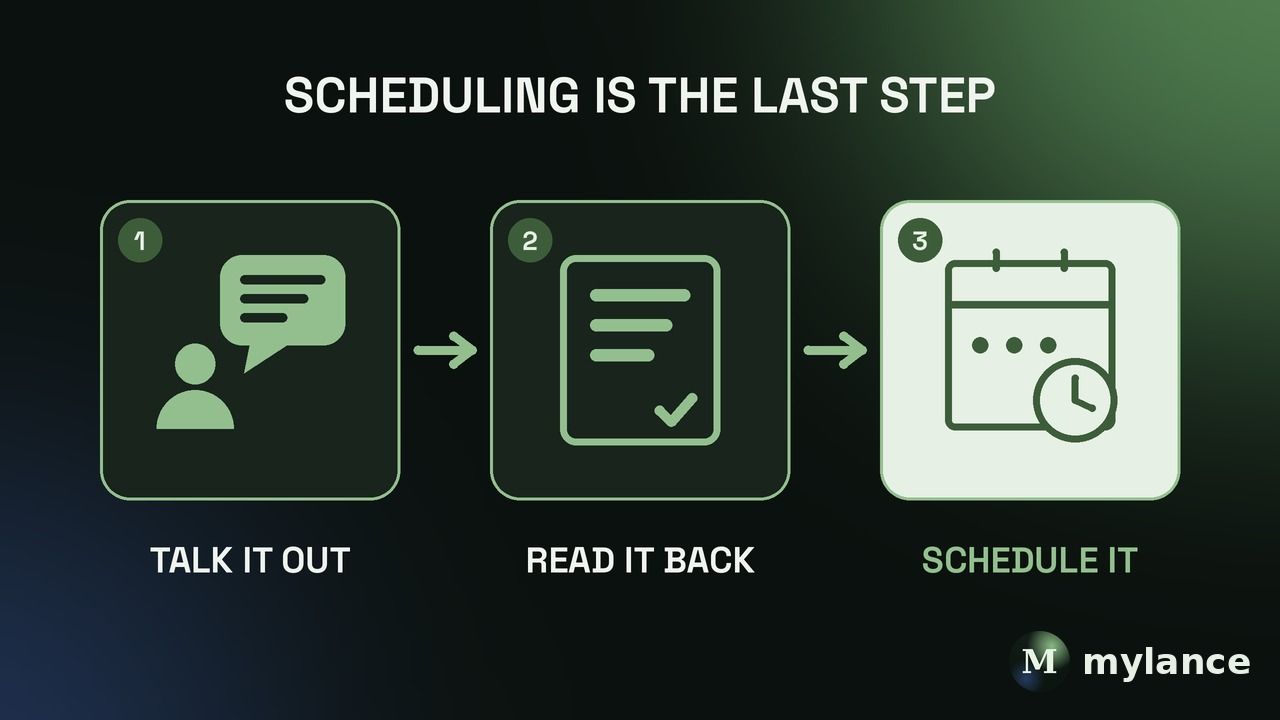
Record yourself instead of typing. If you change one thing, change this. Go on a walk and talk for five or ten minutes about the thing you would tell a client. Record it. That transcript has your rhythm, your asides, the way you actually explain the idea, and the specific details you would never think to write down.
Keep it simple. Don't overcomplicate it. Just record yourself.
Feed it your existing material. Your old posts, your newsletters, a podcast you were on, a blog you wrote. It learns not only what you know but how you write: how you start posts, how you end them, emojis or no emojis, bullets or no bullets.
Judge the draft on specificity, not polish. When I look at a post I ask whether there's a real hook, whether there's specificity, and whether there's anything in it that could not have been written by someone else in your field. Emotion and specificity are the two things worth checking for. Polish isn't on the list.
Then spend the ten minutes. Take the draft and clean it up. That's the difference between a post that sounds like you and a post that gets scrolled past. When you turn a transcript into a well-told story post it takes five or ten minutes rather than an hour, but it isn't zero, and anyone who tells you it's zero is selling you the thing your buyers have learned to spot.
The honest position, from someone selling an AI tool
I sell an AI LinkedIn tool. Mylance is that tool, so weigh this accordingly.
I still tell every customer on their onboarding call: do not post AI content.
We spend an enormous amount of time teaching our AI to write like you. It learns from your own posts, your transcripts, your newsletters. It gets closer every month.
And it is still AI.
I say that on nearly every call, because the tool can remove the blank page, the scheduling, and the what-do-I-post problem. It cannot remove you. The moment it tries to, you're back to sterile.
The test
Before you publish, ask one question.
Could anyone else in my field have written this?
If yes, it will read as AI whether or not a machine touched it. Go one level more specific: the number, the date, the name of the thing, what actually happened on the Tuesday it went wrong.
That's the only test that matters. The em dashes are a symptom.
Keep reading: What to Post on LinkedIn as a Founder
Frequently asked questions
What is AI slop?
AI slop is content that's technically fine and obviously machine-made: the tidy three-part structure, the neat lesson at the end, the cadence that belongs to nobody. Readers have gotten good at spotting it and they discount everything around it once they do.
Will LinkedIn penalise AI-generated posts?
The founders I talk to aren't worried about a platform penalty. They're worried about a reader penalty, which is worse and harder to measure: being read once and never again. Your buyer decides you aren't worth reading and you never find out.
How do I make AI writing sound like me?
Change the input, not the output. Record yourself talking about the topic and feed it the transcript, or give it your existing posts and newsletters to learn from. What a model doesn't know it makes up, so the fix is giving it more of what only you know.
Are em dashes really a giveaway?
They have become one of the most recognised markers, along with scattered emojis and the "here are five tips" structure. Removing them helps, but it only removes the fingerprints. A post with no em dashes can still be sterile if the substance is generic.
How long should editing an AI draft take?
Plan on about ten minutes. Turning a transcript into a finished post takes five to ten minutes rather than the hour it would take from scratch. If a tool promises zero minutes, it's promising the thing your readers have learned to detect.