How do I post on LinkedIn without it conflicting with my full-time job?
October 25, 2026 · Bradley Jacobs
Get your free LinkedIn positioning in 60 seconds — drop your handle:
Yes, you can post on LinkedIn with a full-time job without it turning into a conflict. Share what you've learned about your field, your craft, and the people you want to help, not what's going on inside your company, and don't sell. If your future customer is different from your employer's customer, you're in a really good spot. You're just sharing thought leadership, and you can be fully employed and share thought leadership.
I get some version of this question on calls all the time. Someone's happy in their job, or at least needs it for now, and they want to start building a name for themselves before they go out on their own. Here's what I tell them.
Mylance is a LinkedIn content system that turns your real expertise into posts that sound like you.
How do I know if my posts will be a conflict of interest?
Start with one question: is the customer for your future work the same as your employer's customer, or different? If it's different, you have a lot of room. You can share stories, lessons, and opinions that resonate with the people you eventually want to work with, and none of it competes with your day job.
If it's the same customer, you have to be more careful. That doesn't mean you can't post. It means you need to find a lane you're comfortable talking about that doesn't step on your role but still sets you up for what you want later. I talked with a team effectiveness leader at a big company who was stuck on exactly this. The lane that finally let her post without feeling like she was encroaching on her work was sharing the unwritten rules of the workplace. It's her expertise, it's useful to a lot of people, and it isn't her employer's playbook.
Can I talk about my industry without exposing my company?
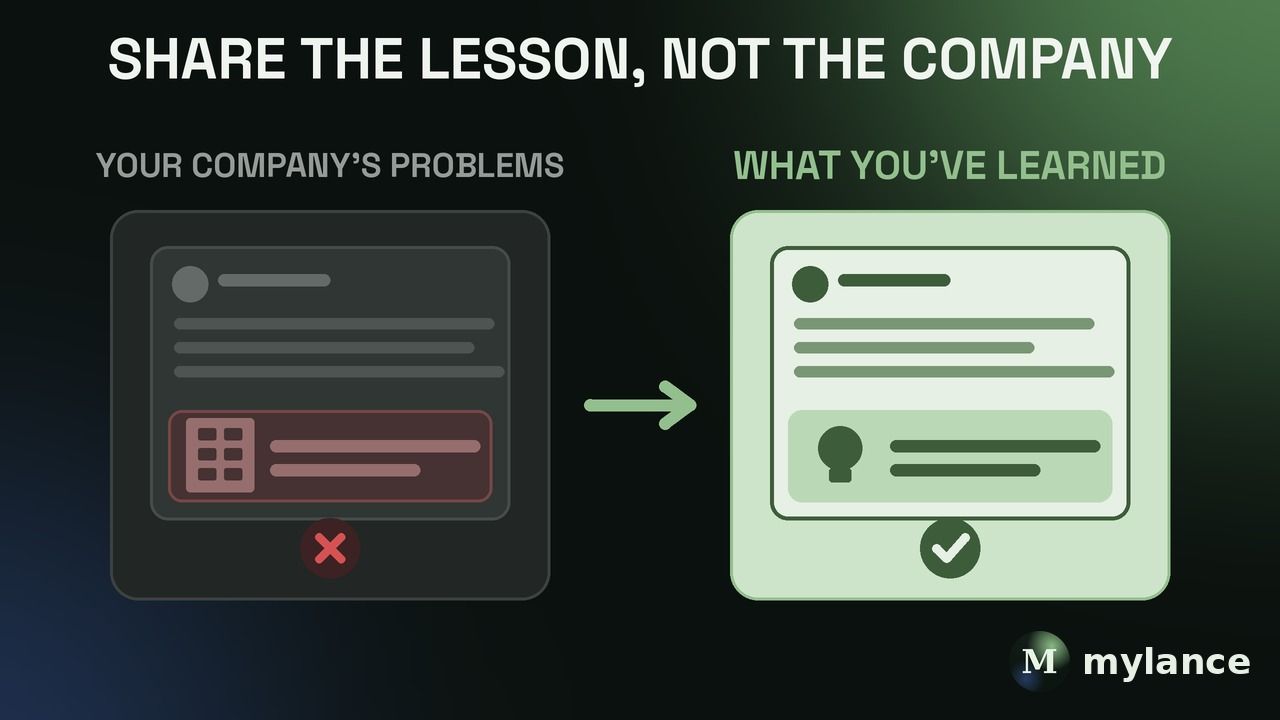
Yes. Talk about the industry and the concept, not the company's problems. A common worry is that people will read your post and assume you're describing something going wrong at your employer. That's fair, so be tactful about it.
Here's the example I use. Let's say I built and sold iPhone software for a living. I could talk about the challenges in building iPhone software, what I've learned about making it intuitive for users, and how I cut costs to build and release it. There's nothing wrong with any of that. The company could even argue you're helping them, because you're getting good knowledge and information out there. What you're really doing for you is building trust and expertise so people know you, whether you work for that company or not.
What to stay away from: anything confidential, anything about a specific customer or deal, and anything that sounds like your company's official point of view. Share the lesson and keep the inside details inside.
How do I post about my side business without my boss getting weird about it?
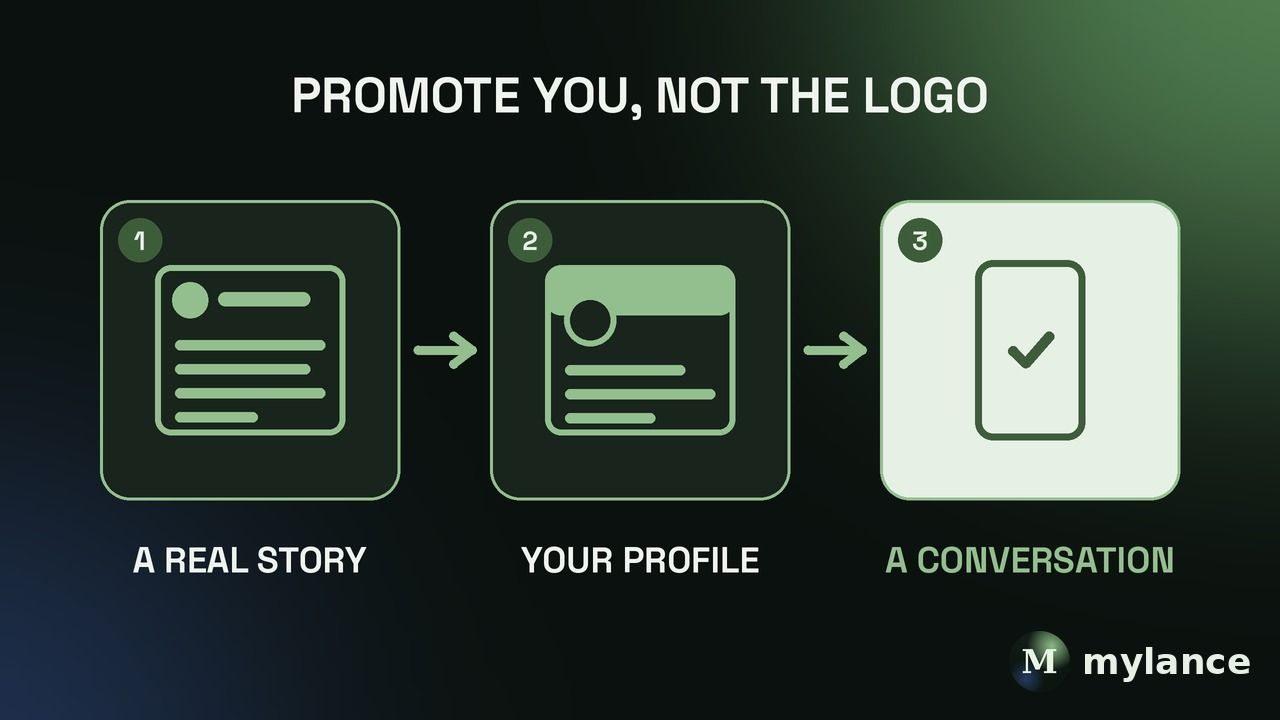
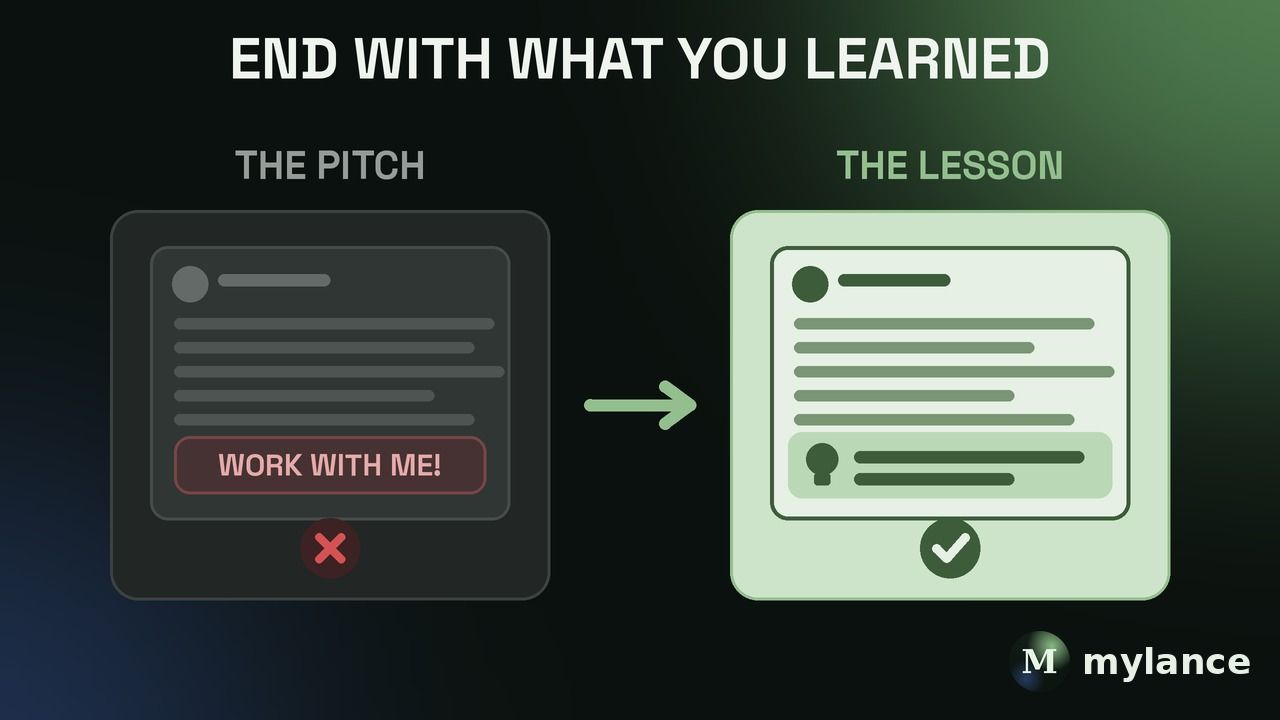
Don't overtly post about the side business. Share the thinking, not the offer. Nobody's content ever does well when it basically says I'm looking for clients in this situation. It's actually totally backwards. You don't sell at all. You add value, add value, add value, and that's when people think oh, this person really knows what they're talking about, I want to talk to them. All they want to do at first is learn from you.
That approach happens to be the safe one at work too. If someone at your company asks why you're posting, you can honestly say you're sharing what you've learned. That's a very different conversation than explaining why your feed is full of a pitch for your own thing.
One person I spoke with went a step further and told her management up front. She got written consent to post and do her own work, as long as she didn't work for competitors or the company's clients. If you're unsure, check your employment agreement and any social media policy, and have that conversation early. It's a lot easier before you've posted than after.
Should my profile say I'm building something on the side?
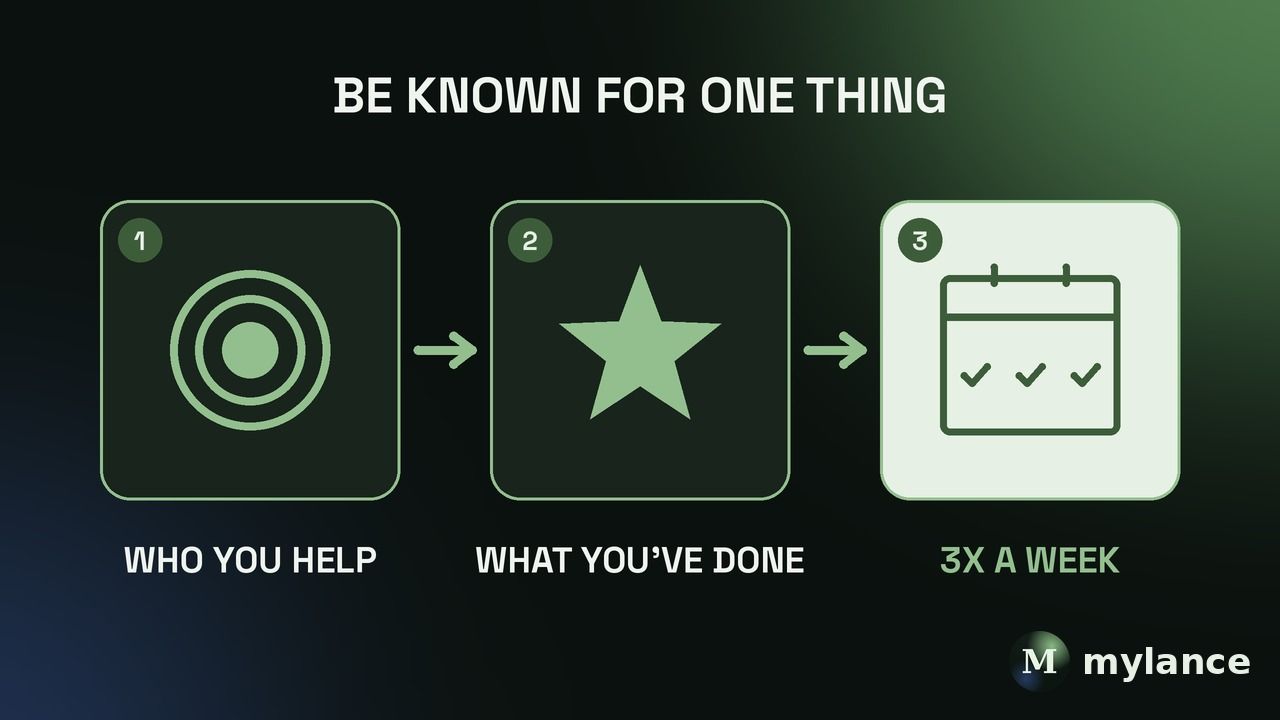
Position yourself around the value you add, not your work arrangement. You really want your LinkedIn to be a cohesive narrative: this is who I am, this is who I help, this is what I bring. Otherwise people come to your profile and they're confused because there are all these different things going on. You don't need a headline that says full-time at X, consulting on the side. You need people to understand what you're great at. More on that in how to build a personal brand on LinkedIn.
And it's fine if that changes. Start by building credibility for who you are right now. In three months, six months, a year, when you're closer to going out on your own, redo your positioning and shift the content with it.
How much should I post if I only have nights and weekends?
Two or three times a week is plenty. When you're doing a nine-to-five and building something else, there's not much left in the tank for creative work, so don't sign up for daily posting and burn out by week three. Pick a pace you can keep for a year. I go deeper on cadence in how often to post on LinkedIn.
The easiest source of material is the work you're already doing. The wins, the mistakes, what you're seeing work and not work in your field. You don't need to invent anything. You need to write down what you already know, minus the confidential parts.
What if nobody engages with my posts?
Don't read too much into likes. People come to me on calls all the time and tell me they've been enjoying my content for the last six months, and they've never liked or commented on one thing. Plenty of people, coworkers included, read quietly. Judge it by whether the right people are starting to know what you're about.
Why build on LinkedIn now if I'm not leaving my job yet?
Because trust takes a while, and you don't want to start from zero the day you need it. We work with executives who are building a personal brand precisely because they know one day they'll leave the company and go out on their own, and they want to be known for something when they do. Planting the seed now while you have a paycheck is the low-pressure way to do it.
When I went out on my own after Uber, the posts that worked were simple: here's what I'm learning, here are the mistakes I'm making. People started reaching out because of that, not because of a pitch. You can start that habit while you're still employed. Just point it at your field instead of your employer.
FAQ
Is it OK to post on LinkedIn while employed full time?
Yes. Posting about your expertise, lessons, and industry is normal and often good for your employer. Avoid confidential information, specific customers, and anything that reads like the company's official view.
Can my employer stop me from posting on LinkedIn?
Some employers have social media policies or agreements that cover outside work, so read yours. If you're planning to build something on the side, telling your manager early and getting it in writing removes most of the worry.
Should I mention my side business in my posts?
Rarely, if at all, while you're employed. Share what you know. Let people find the rest on your profile when you're ready.
What should I post about if my real expertise is my day job?
Find the lane next to it: the craft, the lessons, and the people side of your field, rather than your company's strategy or problems. For idea starters, see how to come up with LinkedIn content.
What is Mylance?
Mylance is a LinkedIn content system that turns your real expertise into posts that sound like you. You bring stories, call notes, and rough ideas. It helps you shape and schedule them, learns from your edits, and you stay in control of what goes out.
Bottom line
You can build on LinkedIn with a full-time job. Share the lesson, not the company. Don't sell, keep your profile about the value you add, and post at a pace you can actually keep. By the time you're ready to go out on your own, people will already know what you're about.
Author: Bradley Jacobs. Published October 25, 2026. Updated October 25, 2026.