Should I use emojis on LinkedIn?
October 13, 2026 · Bradley Jacobs
Get your free LinkedIn positioning in 60 seconds — drop your handle:
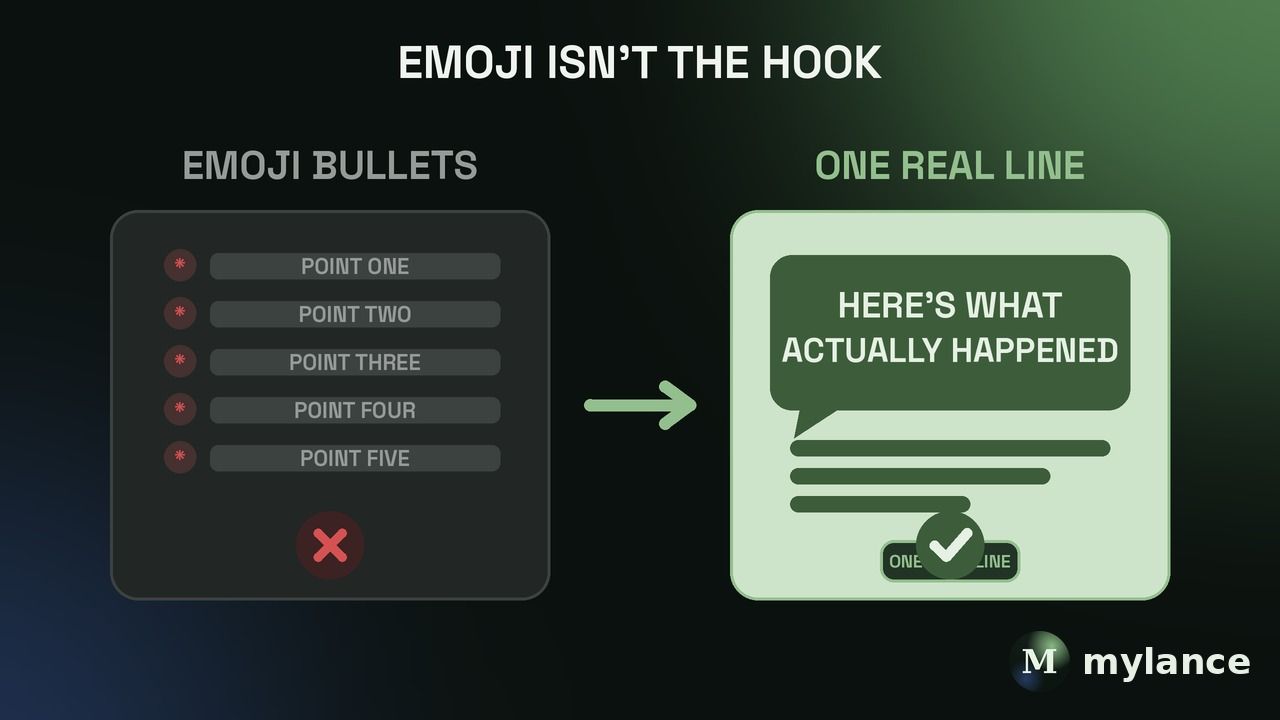
Only if they fit how you already talk. Skip them as decoration, skip them as bullet replacements, and skip them if you would not say them out loud. One or two that earn their place is plenty. A wall of emoji is usually a tell that the post is performing, not talking.
I've been posting on LinkedIn every day for about six years. When I show people how a draft should feel, I say the same thing almost every time: there's no em dashes, there's no weird emojis in here, and it's you. That line is not anti-fun. It is anti-AI-slop.
Mylance is a LinkedIn content system that turns what you know and do into LinkedIn posts that sound like you.
Do emojis help LinkedIn posts get more reach?
Not in a way you should optimize for. Reach comes from a specific story, a clear hook, and a first-person point of view. Detail with tangible facts beats a generic tip list with stars next to every line.
If your best posts are the ones where you say what happened, what you learned, and the numbers or the feeling that came with it, emoji tricks will not fix a flat draft. Substance still does the work.
When should you use an emoji on LinkedIn?
When it matches your real voice and your audience would not blink at it. A single mark at the end of a line you would actually send a friend. Never as a fake list of five "points" with a different icon on each row.
Ask yourself the same filter you use for the whole post: would I put my name behind this? If the emoji is there to look energetic instead of to say something, cut it.
Why do emoji-heavy posts feel like AI?
Because that is often exactly what they are. Generic writing rules for AI are full of the same tells: emojis, em dashes, random rhetorical questions, and an opener that sounds like a template. When we strip those out, the draft starts to sound like a person again.
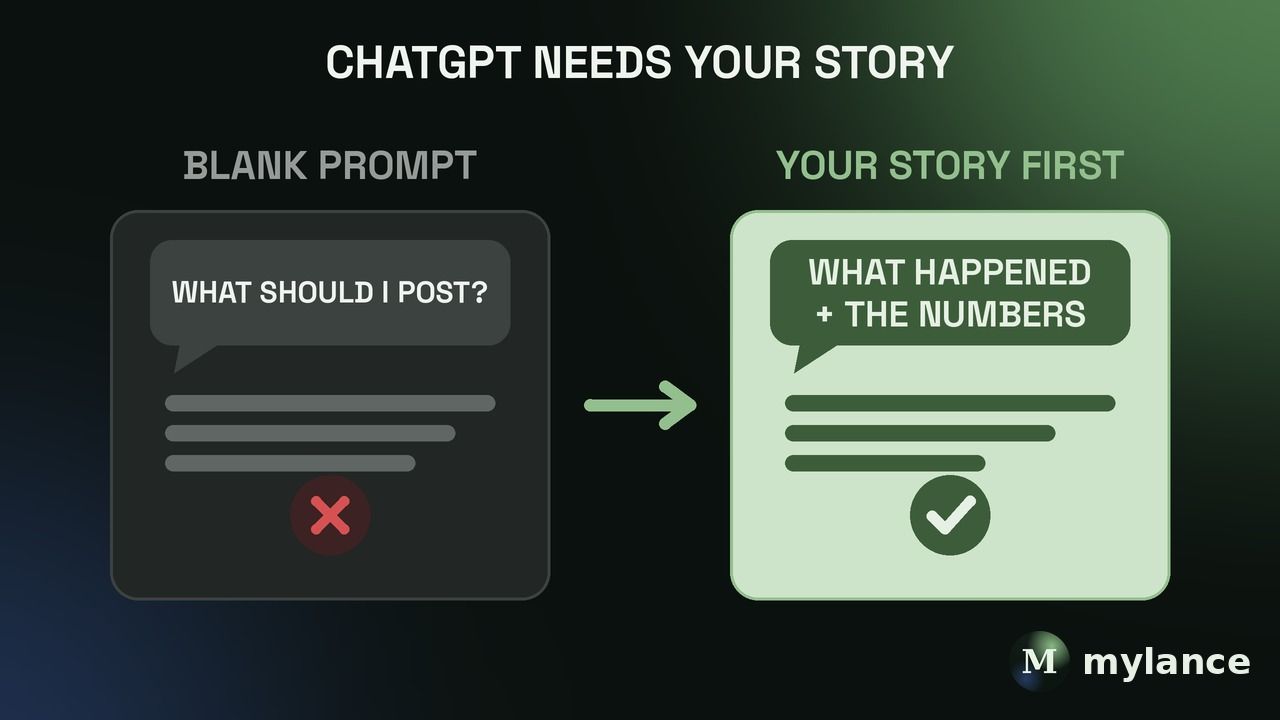
My own workflow is the opposite of decorating a blank prompt. I voice note about five bullets from a lived experience, then change as little as possible while shaping it for LinkedIn. The goal is your story in a readable format, not AI speak with sparkles on top.
What should you do instead of emoji bullets?
Write the line. Tell the story in first person. Share the mistake, the win, or the lesson without turning it into a brochure. The post that taught me the most about this was a first-person story from early Uber days. It did not promote me. It ended with a lesson. It also did about 700,000 impressions. The learning was not "add more icons." It was use real first person and skip the ego, cringe, and generic BS.
If you are stuck on tone, start with how to write LinkedIn posts that sound like you and how to post on LinkedIn without being cringe.
Should professionals skip emojis entirely?
No blanket rule. Some people use one casually and it reads fine because that is how they talk. Others never use them, and that is also fine. Professional does not mean stiff. It means the post sounds like you, not like a content farm.
Don't publish AI. Finish the draft. If an emoji survives that pass because it is genuinely yours, leave it. If it only showed up because the model likes decoration, delete it.
FAQ
Should I use emojis on LinkedIn in 2026?
Sparingly, and only when they fit your voice. They are not a growth hack.
Do LinkedIn emoji bullets work?
Usually they make the post look templated. Prefer a real sentence over a decorated list.
Are emojis an AI tell?
A pile of them often is, especially with em dashes and stock openers. One earned emoji is not the same thing.
How many emojis per LinkedIn post?
Zero is a good default. One or two max if they sound like you out loud.
What is Mylance?
Mylance is a LinkedIn content system that turns your real expertise into posts that sound like you. It starts from your own notes, calls, and stories, helps you decide what to say, and learns from your edits. You stay in control of what goes out.
Bottom line
Emoji is not the hook. Your voice is. Write the thing you would stand behind, change as little as possible from what you actually lived, and leave the decoration off unless it is truly you.
Author: Bradley Jacobs. Published October 13, 2026. Updated October 13, 2026.