
Mindset
Stop Chasing the Next Client: Sloane on the Growth Strategy Nobody Puts in the Plan
September 30, 2026 · Bradley Jacobs
Get your free LinkedIn positioning in 60 seconds — drop your handle:
You know the math. One more anchor client and the pipeline stops feeling fragile. One retainer at the next price tier and you can finally relax.
Then you land the client, raise the rate, and the finish line quietly slides another 50 yards down the field.
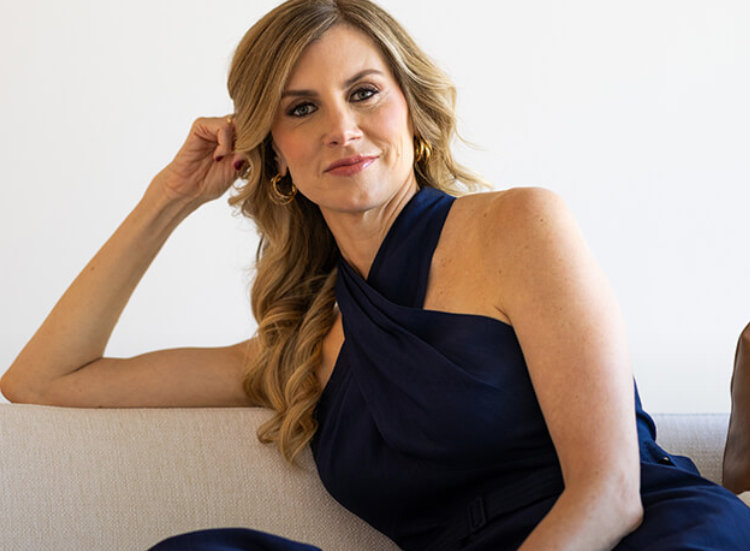
Sloane knows that slide better than most. She spent more than a decade as a business attorney advising everyone from startups to multi-billion-dollar companies, then built her own firm, scaled it, and sold it in 2018. Today she is a transformational mentor for high-performing women, with a certification in women's neuropsychophysiology and a TEDx talk behind her.
This post is a detailed account of her conversation with Mylance founder Bradley Jacobs on Founder Unfiltered. You'll learn why "sacrifice now, be happy later" is a bad trade, how Sloane's slingshot model works, what business culture gets wrong about women's biology, and why she argues that true pleasure is profitable.
The Finish Line That Keeps Moving
Sloane's first big decision felt pure. As a high schooler outside Columbus, Ohio, she decided she was going to live in Ecuador. Everyone said absolutely not, and she went anyway.
The decisions after that got less pure. Stuck selling loans at a bank after college, she went to law school. Told she didn't have the grades for Big Law, she landed the job anyway, and within a year she hated it. So she started her own firm and made $12,000 in the first six months, against roughly $150,000 she would have earned in her old seat.
Then came the million-dollar year, the partner to travel the world with, the coaching business, and the sale of the firm. Looking back, she sees that almost every move was made to escape something she didn't want rather than to move toward something true for her. If you've ever taken a fractional engagement mostly because the last one was miserable, you know exactly what she means.
Sacrifice Now, Be Happy Later Is a Terrible Deal
Startup culture, and plenty of consulting culture, runs on one promise: grind yourself down now and fulfillment arrives later. As an M&A attorney, Sloane watched founders sell the companies they had sacrificed everything to build and then fall apart into depression, failed marriages, or a year abroad trying to find themselves.
Her line on this is the one Bradley wrote down mid-interview: "How you feel on the journey is how you feel when you reach the destination."
Bradley pushed back on behalf of every founder listening. Wouldn't $10 million in the bank feel different? Sloane's answer was that if you're worried about rent, your focus rightly goes there. Past that point, don't take her word for it. There are roughly 50 years of research on subjective well-being, and Shawn Achor's The Happiness Advantage pulls much of it together. Happier people generate more success, more wealth, and better relationships. If you're miserable while you build, you're running at reduced capacity.
The Slingshot
Sloane uses the image of a slingshot. When you start paying attention to how you feel and whether a decision is aligned, it feels like pulling the band backward, because energy that could go to pipeline or client delivery is going inward instead. Then you let go, and you move forward with more speed and ease than pushing ever gave you.
It takes three steps: understand the idea intellectually, hold a vision that creating from a better-feeling place will improve every outcome including revenue, and be a maverick about it, because almost nothing in the business world will encourage you to.
Business Was Built for a 24-Hour Body
The way most of us were taught to create success is masculine: set goals, execute, repeat. That model rewards single-pointed focus. Women more often have diffuse awareness, tracking the conversation, the kid in the next room, and the traffic outside all at once. It's a gift, but in a business setting it can quietly run women into the ground.
Biology adds another layer. Men run on a roughly 24-hour hormonal cycle, while women run on an approximately 28-day cycle whose hormones direct nearly every system in the body. As Sloane puts it, women are essentially four different people over a month, working inside a system that demands identical output every day.
Sloane reframes the low-energy days as a superpower. Late in the cycle the body slows down and the brain's hemispheres become more connected, which is associated with stronger intuition. Those are days for reflection and big-picture insight. Even a shorter fuse carries information, because it often points to something on a team that has gone unsaid too long.
If you're a woman running a fractional practice, that's a case for designing your calendar around your energy. If you're a man leading a client engagement, it's a case for retiring the tired jokes.
Lead With Curiosity, Then Do Your Own Work
Bradley widened the lens: in business, you rarely know what's happening in anyone's health or family. Sloane shared a story Jack Canfield tells about a man on a subway with two out-of-control kids. A furious stranger demanded he rein them in, and the man replied, dazed, that their mother had just died. The stranger's reaction changed the moment his story did.
For anyone embedded in a client's team as a fractional leader, the lesson is to have enough internal capacity to ask the curious question instead of snapping "what's wrong with you?" That capacity comes from doing your own work first.
The Dinner Table in Mexico
After selling the firm, Sloane had it all on paper: the boyfriend, the coaching business, friends who treated the world like a playground. Behind the scenes, she was fighting constantly with her partner, crying often, and feeling disconnected from her young daughter.
Then, at dinner at an exquisite resort in Mexico, surrounded by laughing, toasting friends, the thought came to her consciously for the first time: I am not happy. After 15 years of personal growth work, she had deliberately built a life that felt wrong.
She names two missing pieces. The first is alignment, being in touch with your truth and making decisions from there. The second is a deep connection to yourself. She avoids "self-love," calling it the most misunderstood term out there. Everyone says they love themselves, but the real measure is how you treat yourself moment to moment, the same way you'd judge anyone else who claims to love you.
That is the foundation of her signature idea that true pleasure is profitable. True pleasure isn't a life without anxiety. It's an inner state of feeling aligned, alive, and connected, so the hard days register as dips instead of your baseline. Build from there, she argues, and you create your highest levels of success, impact, and connection.
The Takeaway for Your Practice
The next client, rate, or revenue number won't deliver a feeling you aren't already building on the way there. Before you chase the next engagement, ask whether you're running toward something true or away from something you hate, and treat how you feel as an input to the business rather than a reward for it.
To go deeper with Sloane, visit therealsloane.com and watch her TEDx talk, The Silent Struggle of the Woman Who Has It All.
And if part of what's draining you is the constant pressure to find the next client, Mylance can help. We help fractional executives and consultants build credibility-driven LinkedIn content that brings the pipeline to them. Book a free LinkedIn positioning session at mylance.co.
Mylance
Your LinkedIn should be working for you, attracting clients, building credibility, and compounding with every post. Mylance makes that happen. See how it works →