
Mindset
The Benefits of Partnerships, How Working with Other Contractors Can Improve Your Business
September 13, 2023 · Team at Mylance

Get your free LinkedIn positioning in 60 seconds — drop your handle:
In the business world, we often hear tales of the "lone wolf" entrepreneur or contractor who built an empire single-handedly. While such stories are inspirational, they're increasingly becoming exceptions rather than the rule. Today's rapidly evolving and highly competitive market conditions necessitate a more collaborative approach. That’s where partnerships come in.
Forming strategic partnerships can offer boundless opportunities for modern contractors, whether in marketing, IT, design, or other sectors. In this article, we'll delve into how partnerships can help scale your business, maximize your time for tasks you excel at, and why communities like Mylance can be the cornerstone for these partnerships.
The Necessity of Partnerships for Modern Contractors
Contractors today face a complex landscape marked by increasing competition and clients who demand more specialized “boutique” services. Gone are the days when being a jack-of-all-trades could make you the go-to contractor in your field. Now, you’re up against an army of specialists and larger firms with more resources.
So, what's the solution? Partnerships. By pooling resources, skills, and knowledge, contractors can achieve more together than they could separately.
Scaling Your Business Through Partnerships
Expanding Skillsets Without Hiring
Hiring a full-time employee for a specialized skill set that's only needed occasionally doesn't make financial sense. Enter partnerships. By forming alliances with other contractors who possess the skills you lack, you can offer a fuller service portfolio without bloating your payroll.
For instance, an IT contractor could partner with a cybersecurity expert to provide clients with a more complete IT solution. This kind of synergy doesn't just make you more appealing to clients, it also opens up new revenue streams.
Pooling Resources
Partnerships can be your ticket to those high-value contracts that were once beyond your reach. When two or more contractors combine their resources, they create a compelling proposal that a client must pay attention to. From sharing marketing costs to co-bidding on projects, the financial benefits of partnering can be substantial.
Geographic Expansion
If you've been eyeing expansion into new locations but need help with how to proceed, partnering with a regional contractor can be a viable strategy. Not only will your partner bring local market knowledge, but you'll also share the risk involved in such a venture.
Maximizing Time for Specialization
Focus on What You Do Best
Every contractor has a unique set of skills that sets them apart. In a partnership, you can lean into these specialties while your partner takes care of other aspects of a project. This division of labor is based on the economic principle of comparative advantage, where each partner focuses on tasks they can perform most efficiently. The result? Higher quality work in less time.
Improved Project Management
Project management is often the silent casualty in a contractor's attempt to juggle multiple roles. However, with a partner, you can delegate responsibilities like client communication, financial planning, or quality assurance, ensuring that no aspect of the project management suffers.
Contractors who have entered partnerships often report a smoother, more streamlined project flow, which translates to satisfied clients and repeat business.
Networking Opportunities & Community Building
The Mylance Community
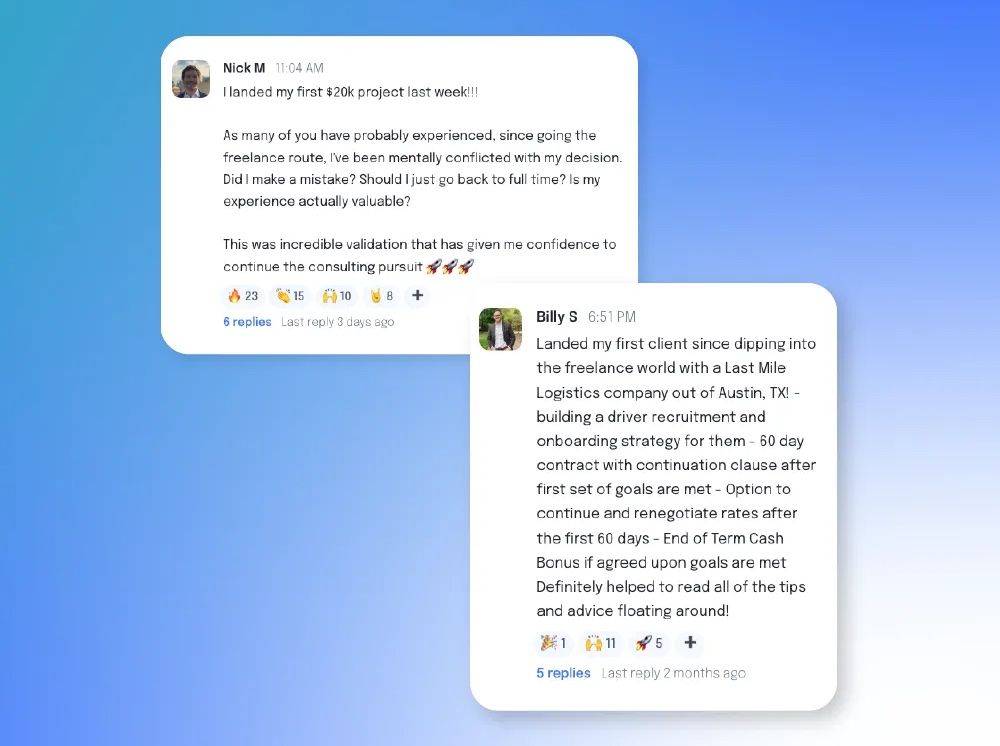
If you’re wondering where to find like-minded contractors for potential partnerships, look no further than the Mylance community. Explicitly aimed at contractors, Mylance offers a fertile ground for networking, skill swapping, and collaboration. Members often share leads, co-bid on contracts, and even form long-term partnerships.
Moreover, Mylance provides a space for contractors to share insights, best practices, and opportunities in a supportive environment. Several community members have gone on to build fruitful partnerships, crediting Mylance as the starting point of their collaboration.
Continuing Professional Development
Partnerships can become an invaluable resource for professional development. The constant exchange of ideas, exposure to different approaches, and even constructive criticism can help you refine your skills and broaden your understanding of the market.
Industry Events and Trade Shows
These events offer a wealth of opportunities to meet potential partners. Contractors usually attend these events to showcase their services, learn about market trends, and network. Building a partnership can start with a simple introduction at a booth or during a panel discussion.
Online Forums and Social Media Groups
The internet provides many specialized forums and social media platforms where contractors worldwide discuss best practices, share insights, and seek advice. Such platforms can be an excellent place to find like-minded individuals or organizations interested in forming partnerships.
By leveraging these channels, contractors can explore partnerships that could lead to professional and personal growth. Whether it's a community like Mylance or an international trade show, the opportunities for forming meaningful partnerships are abundant.
The Do’s and Don’ts of Forming Partnerships
Navigating partnerships involves much more than just shaking hands and dividing responsibilities. It's a venture that needs careful planning and strategic thinking. Here, we delve deeper into the critical do's and don'ts when considering and forming a partnership.
Do’s
- Conduct Due Diligence
Before forming any partnership, thorough research is a must. You should verify not just the professional reputation of your potential partner but also their financial stability. Check references, read reviews, and even conduct a background check if appropriate.
- Draft a Formal Agreement
A well-crafted partnership agreement serves as the roadmap for how you will manage this new venture. This document should outline the roles and responsibilities of each partner, financial contributions, how profits (and losses) will be shared, and what the exit strategy might be.
- Regular Communication
Regular, open, and honest communication can't be overstated. From weekly updates to monthly performance reviews, maintaining a communication channel helps both parties stay on the same page and helps resolve issues before they escalate.
- Set Clear Expectations
Discuss in detail what each partner expects from the partnership. Whether it’s the investment of time, money, or resources, having clear expectations will minimize the chance of conflict later on.
- Continuously Evaluate the Partnership
A partnership isn't something you set and forget; it’s an ongoing relationship that requires periodic evaluations. Check-in to see if the partnership's goals are being met and whether both parties are satisfied.
Don’ts
- Rush into Partnerships
The initial euphoria of a new partnership opportunity can be intoxicating, but rushing into a partnership without understanding the implications can lead to problems. Take your time to know your potential partner’s working style, expectations, and even corporate culture.
- Neglect Legal Advice
A legal advisor can guide you through the intricacies of a partnership agreement, help you understand the fine print, and ensure your interests are protected. Not seeking legal advice can put you at a disadvantage, mainly when issues arise.
- Overlook Dispute Resolution Mechanisms
Every partnership will face challenges. What matters is how you resolve them. A dispute resolution mechanism in the partnership agreement is needed to avoid disaster.
- Ignore the Exit Strategy
Even with the best intentions and plans, partnerships can fail or may need to be dissolved for a variety of reasons. Failing to outline an exit strategy leaves you unprepared for such situations and can make the dissolution process messy and stressful.
- Compromise Core Values
While partnerships require compromise, you should never compromise your core values or principles for the sake of the alliance. If you have to bend your moral or ethical standards, it’s a sign that the partnership isn't a good fit.
Caveats and Contingencies
Always prepare for the unexpected. What if one partner wants to exit the partnership? What if the business faces a sudden financial crisis? Having contingencies in place will make it easier to navigate these challenging situations.