LinkedIn for consultants
September 6, 2026 · Bradley Jacobs
Get your free LinkedIn positioning in 60 seconds — drop your handle:
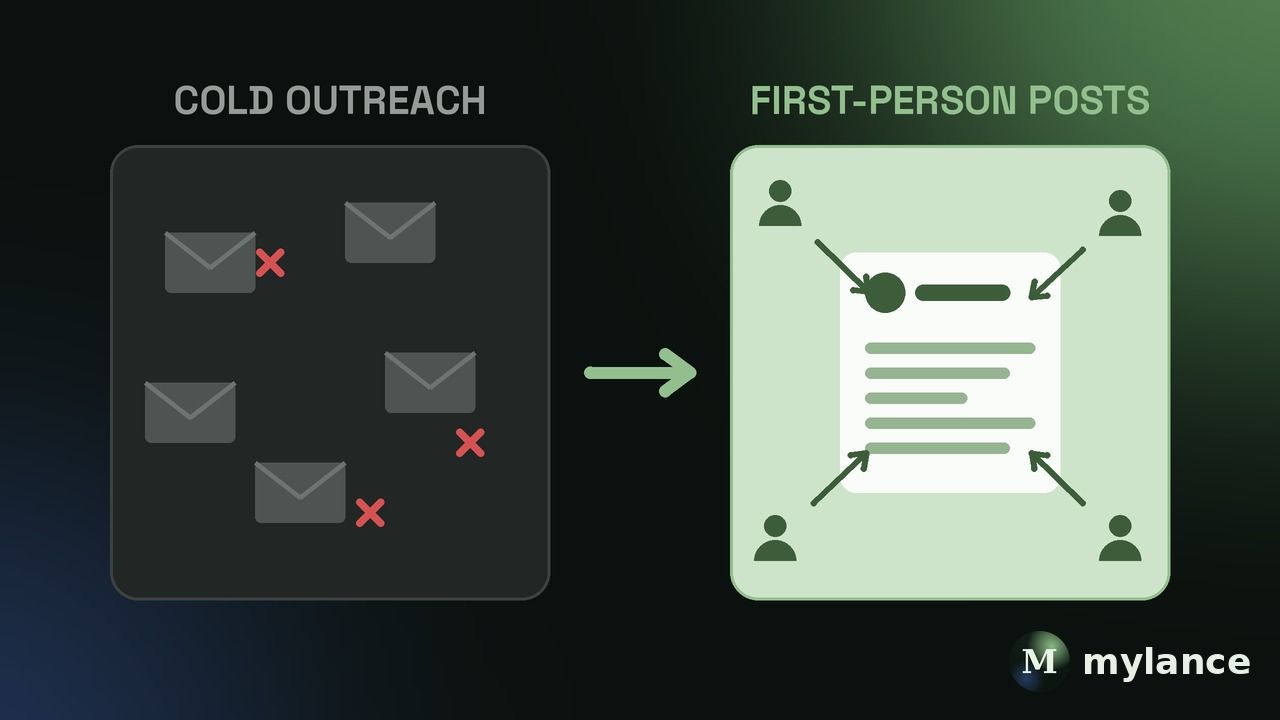
LinkedIn for consultants is simple when you strip the noise: use your personal profile as the landing page, lock positioning so people know what you are known for, and post first-person learnings, wins, and mistakes at least three times a week. Not company-page announcements. Not cold outreach dressed up as content. Not AI slop.
I founded Mylance in 2020 to support independent consultants. Along the way I have worked with consultants, fractional leaders, founders, and operators who already have a real business and something valuable to say. The pattern is the same: you know a lot. Turning that into good LinkedIn content consistently takes too much time and mental energy.
Mylance is a LinkedIn content system that turns your real expertise into consistent LinkedIn content that sounds like you.
What does LinkedIn for consultants actually mean?
It means getting known for what you already know.
On our Maven workshop I said it plainly: if you do not share what you know on LinkedIn, the only people who know what you know are the people you have worked with directly. Referrals are not a lever you can pull on demand. LinkedIn is how you build a one-to-many relationship with people in your ICP before they ever book a call.
For consultants, that is not "become a content creator." That is: clear positioning, content that ladders up to it, and a habit that does not become a second job.
Why does LinkedIn matter for consultants who already have an offer?
Because trust and familiarity show up before the sales conversation.
I have been posting on LinkedIn for about six years. It has been a game changer for every part of my business—podcasts, press, credibility, trust. In a chat with Ognen I put it this way: when you share the expertise you already have, opportunities start getting thrown at you. Advisories. Board conversations. People who already know what you are known for.
That only works if you already have a real business and a clear ideal customer. LinkedIn for consultants is not for someone still figuring out what business to start. It is for people who can close when the right conversation shows up.
Should consultants use a LinkedIn company page or personal profile?
Personal profile first. Company page as an afterthought.
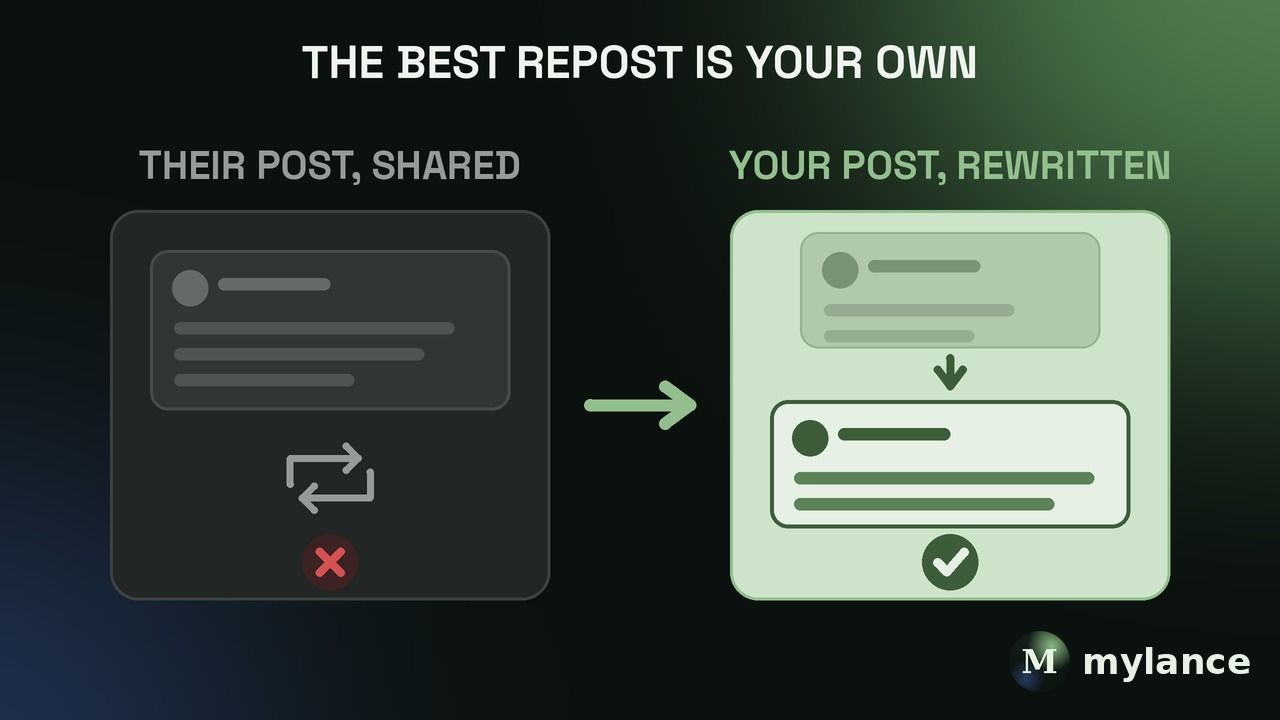
People want to hear from people. On an Impromptu Zoom session I told the room: if you are only going to post on one, post on your personal page. You can promote personal content through the company page. You can post the occasional video there. Look at the Mylance company page and you will see reposts of me. It is nowhere close to what I do on my personal page.
Your personal profile is the landing page. The post is the doorway. In one 90-day window I had 3,166 profile views. The number that matters is not likes. It is people landing on who you are, who you help, and how to get in touch.
What should a LinkedIn profile for consultants say?
It should make your positioning obvious in one pass.
Great content starts with great positioning. Who do you help? What problem do you understand better than most? What should you be known for?
In the Maven workshop we pressure-tested positioning by asking what the audience actually cares about. Then: content pillars that ladder up to the positioning. Then every post ladders up to a pillar. Everything ladders up to your positioning. If the profile is vague, the content will be vague, and people will bounce.
How should consultants post on LinkedIn?
First-person stories. Learnings, wins, mistakes. Specific beats generic every time.
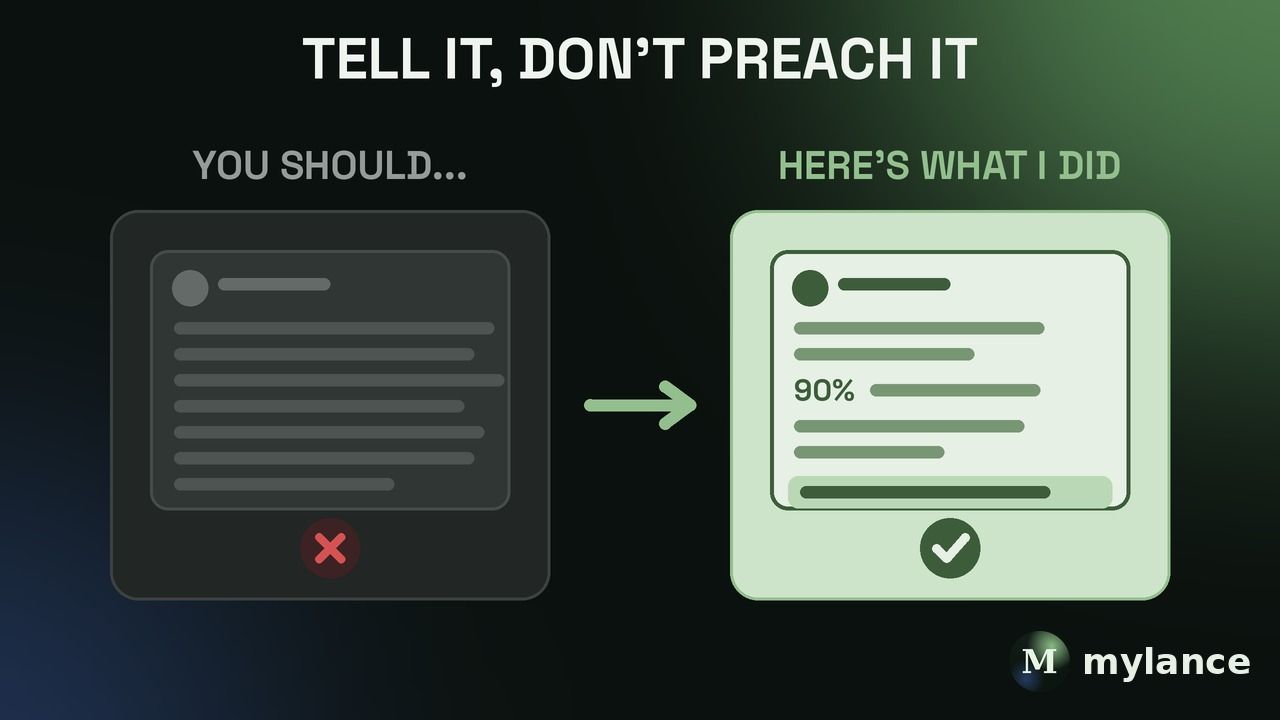
I keep using the Raleigh example because it is the cleanest one I have. Uber and Lyft launched Raleigh on the same day. I was on that launch team. I wrote about what we did—not a resume, not "hire me." That post generated 700,000 impressions and 22 inbound conversations. It was an outlier, not a promise. The useful part is why it worked: specific, skimmable, based on personal experience, written from a first-person point of view.
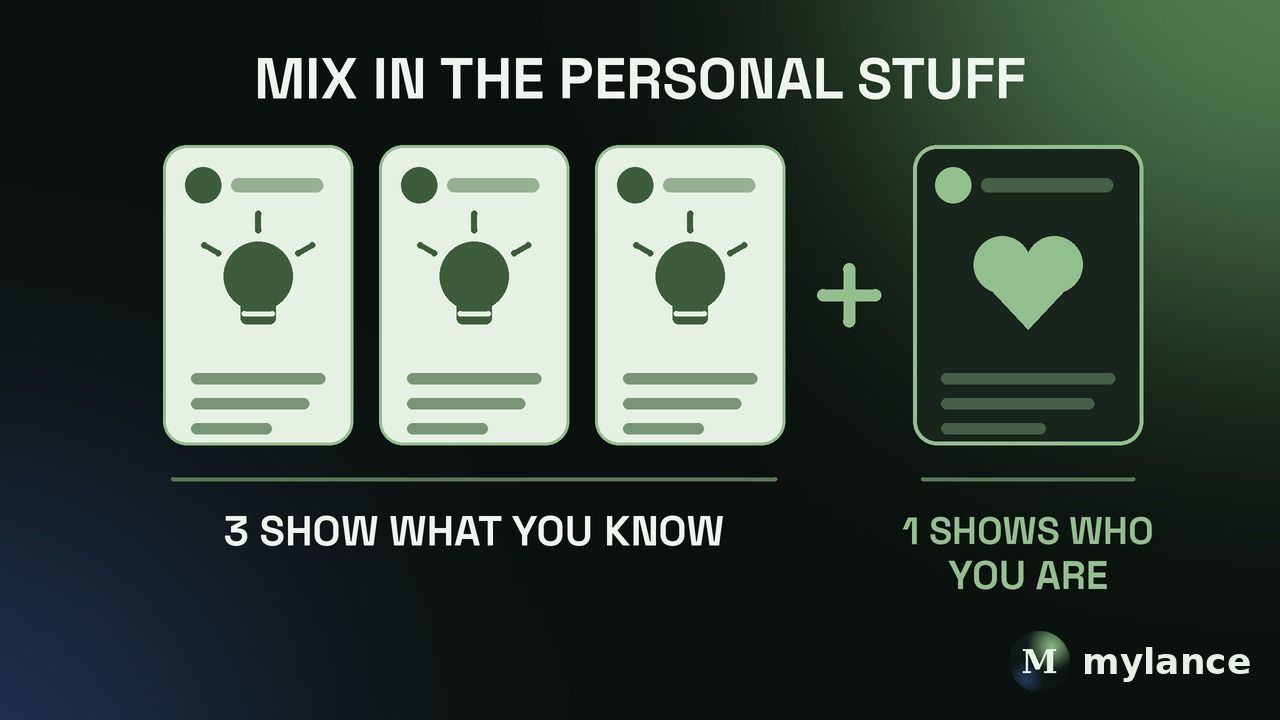
Use the 5-of-6 ratio. Five out of six posts are value. One in six can say who you are and how you help. Mistakes are great to share. A tactic that did not work is often more useful than another polished win.
How often should consultants post on LinkedIn?
Minimum three times a week on the personal profile.
Even three times a week sounds like a lot to people. Your followers are not seeing every post. Three times a week often means they see you about once. In a call with Matthew Accomando we landed around two to three as a practical range. I still argue for three as the floor if LinkedIn matters to the practice.
How do consultants avoid AI-sounding LinkedIn posts?
Start from real source material. Then ask: does this feel like AI slop, ego, or a real learning?
I told the Impromptu Zoom room I have been using Mylance for about 12 months to leverage AI in an effective way—not an AI-sloppy kind of way—to show up consistently and authentically. Generic commentary is what you get when you prompt a tool without an interview. Real wording, phrasing, and experiences are what make the draft interesting.
AI can polish a thought. It cannot supply the detail of a room it was never in.
What should consultants optimize for on LinkedIn?
Profile views. Trust. Familiarity.
It is not the content that closes. It is content driving people to the profile, then the profile doing the job of who you are and who you help. Frame that as trust and visibility. Do not pretend a post is a closed engagement.
Is LinkedIn for consultants different from LinkedIn for founders?
The structure is the same. The stories change.
Positioning, pillars, first-person posts, three times a week, personal profile first. Consultants lean on client patterns, delivery lessons, niche expertise, and the mistakes that taught the offer. Founders lean on product and market. The anti-pattern is identical: company-page filler, AI-sounding tips, and no chain from positioning to post.
FAQ
Do consultants need a LinkedIn company page?
Optional. Useful for proof and amplification. Not the main stage.
How often should independent consultants post on LinkedIn?
At least three times a week from the personal profile, once positioning and pillars are locked.
What is the biggest mistake consultants make on LinkedIn?
Posting without positioning, or sounding like every other AI-written "thought leadership" tip. Specific first-person experience wins.
Can ChatGPT replace a consultant's LinkedIn strategy?
No. It can help draft. Without your real expertise and hard edits, it writes like AI. Positioning is the filter.
What is Mylance?
Mylance is a LinkedIn content system that turns your real expertise into consistent posts that sound like you. It remembers you, starts from real source material, helps decide what to say, and learns from edits. It is not an AI copywriter, not a scheduler, not lead-gen, not outreach. The job is consistent LinkedIn content from expertise you already have—so LinkedIn stops being another job.
That is LinkedIn for consultants who already have a business: get known for what you already know, from your personal profile, in your voice.