The Inside Story of My 700K+ View LinkedIn Post (And How You Can Create Your Own)
February 5, 2025 · Bradley Jacobs

Get your free LinkedIn positioning in 60 seconds — drop your handle:
Picture this: you've been posting on LinkedIn for years, sharing your best business lessons, insider tips, and hard-won takeaways. Most posts get a respectable amount of engagement. A few dozen likes, a couple of comments, maybe a share or two. Not bad, but hardly the stuff of LinkedIn legend.
Then one ordinary day you hit publish on a post that stops people mid-scroll. The notifications start pouring in: hundreds of likes by the minute, dozens of comments, connection requests from people who want to learn more from you.
That's the dream, right? It's exactly what happened to me with one post. Today I want to pull back the curtain on what made it work, and how you can use the same principles to write your own LinkedIn posts that catch the attention of the clients and customers you want.
Flashback: the post that started it all
To appreciate the impact of my most viral post, we have to rewind a bit. It was 2018, and I'd just wrapped up a transformative four-and-a-half-year run at Uber. As I got ready for my next chapter, I did what a lot of people do during a big career transition: I wrote a reflective LinkedIn post.
In it I shared some of the most useful lessons I'd learned at Uber, and gave shoutouts to a few colleagues and mentors who'd helped me grow. I hit publish and honestly didn't think much more about it.
A few days later I nearly spat out my coffee when I checked how it was doing. It had over 40,000 impressions, a number that dwarfed my usual posts. Keep in mind this was long before I'd built up any real following on the platform.
That post was my first glimpse of what LinkedIn could actually do. By sharing genuine, useful content drawn from my own experience, I could reach a huge audience of people who wanted to learn and grow.
And that was just the start. As I kept sharing stories and lessons from my career, I noticed something: potential clients started coming out of the woodwork, reaching out about my consulting services and the challenges they were facing.
Almost by accident, I'd tapped into a powerful new channel for growing my business and building my authority. And I was determined to keep refining the approach.
The post that almost broke the internet
Now fast forward to the high point of my LinkedIn posting so far. Here's the hook that kicked it off:
"Uber and Lyft launched UberX in Raleigh on the same day. Fast forward six months. Uber had 90% market share in the area. Here's how we won."
Intriguing, right? Even I was blown away by how much it resonated. When the dust settled, it had racked up:
- 700,000+ impressions
- 4,000+ likes
- 156 comments
- 101 reposts
To put that in perspective, it beat my average post by orders of magnitude. I'd struck LinkedIn gold.
But why? What was it about this one that caught fire? Let's break it down, piece by piece.
The anatomy of a viral post
- A behind-the-scenes look at a household name. Part of what made it irresistible was that it offered a rare peek inside Uber, a brand almost everyone knows. People are naturally curious about what goes on behind closed doors at the companies that shape our world.
- A clear, compelling promise. From the first sentence, the post promises something worth reading: an inside look at how Uber dominated a new market despite launching the same day as its biggest rival. It frames the post as a stack of go-to-market lessons straight from the front lines.
- Specific, actionable insights. The post delivers on the hook, walking readers through four decisions that set Uber apart from Lyft:
- Setting one crystal-clear primary KPI
- Taking a disciplined, data-driven approach to expansion
- Putting rider experience ahead of growth at all costs
- Embedding teams on the ground in each market
By the end, readers walk away with a practical playbook for winning a market that they can start using in their own business.
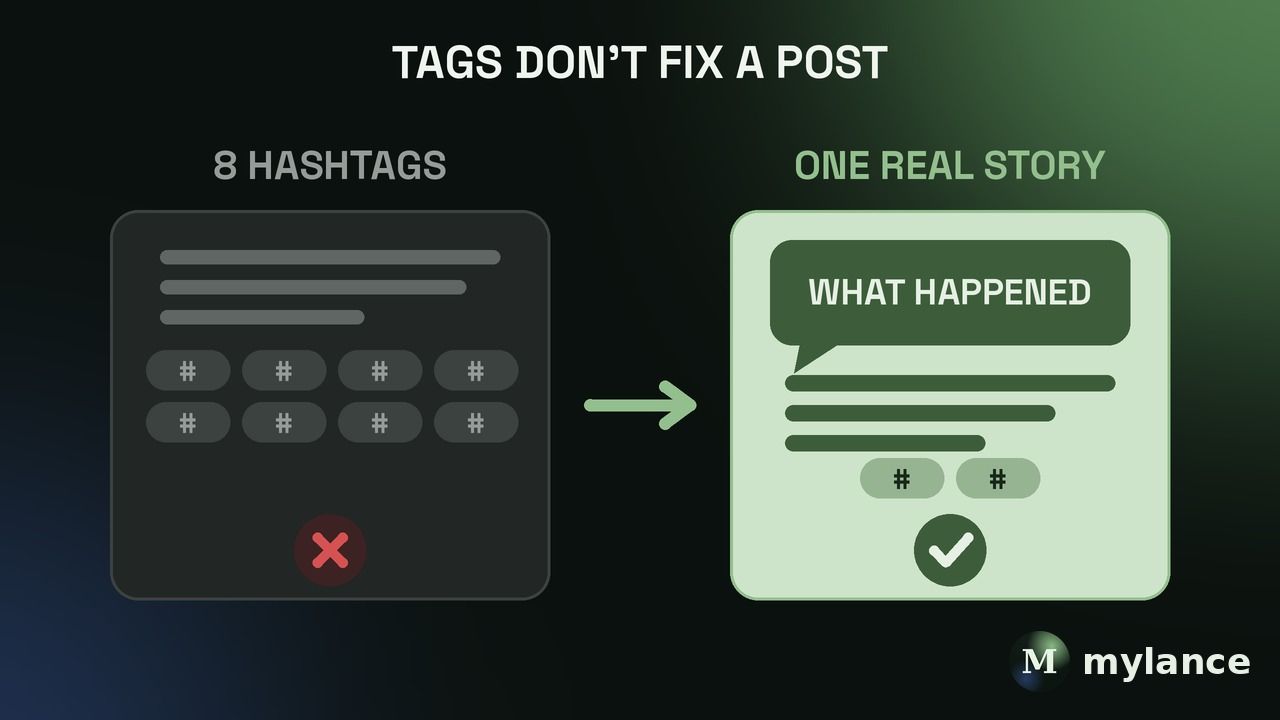
- Storytelling beats self-promotion. Maybe most important, the post never turns into a thinly veiled sales pitch. No mention of my consulting services, no heavy-handed calls-to-action, no nudge toward a lead magnet or a discovery call.
Instead it's 100% focused on telling a genuinely interesting story and pulling out lessons readers can use. By putting real value ahead of self-promotion, it made a deeper impact, and ended up attracting far more interest in my expertise.
Reverse-engineering virality (no big brand required)
At this point you might be thinking: of course it took off, it name-dropped one of the most talked-about companies of the decade. But I don't have Uber on my resume. How does this help me?
Here's the secret: you don't need a household-name company on your resume to write LinkedIn posts that stop the scroll and make your ideal clients sit up.
The real key is understanding your audience deeply. Their goals, their challenges, what's standing between them and the results they want. Pair that with the insights and lessons you've collected over your career, and you've got the raw material for posts that land and spark real conversations.
For example, say you're a CFO who helps tech startups raise money. You could open a post with a hook like:
"The biggest fundraising mistake I see founders make (it cost one of my clients a $10M round)."
Then in the post you'd walk through:
- The specifics of the mistake (names changed to protect the client, of course)
- The painful ripple effects it had on the rest of the raise
- The step-by-step approach you used to get the round back on track
- The lessons and best practices for avoiding the same trap
By the end, readers walk away with an insider's view of a problem they're probably wrestling with themselves, plus tested strategies they can use in their own fundraising. That kind of insight is worth its weight in gold.
Do that consistently and you build a reputation as the person founders want in their corner when it's time to chase down big checks. All without a single salesy call-to-action.
Bringing it all together
Let's zoom out. Writing LinkedIn posts that cut through the noise and actually land with your audience comes down to three things:
- Drawing on your own mix of experiences and hard-won lessons to tell authentic, relatable stories
- Showing a real understanding of your audience's biggest goals and challenges
- Putting genuine value and education ahead of overt self-promotion
None of these need a big-brand pedigree or a huge existing audience. They're built entirely on your own expertise, your empathy for your audience, and your willingness to show up and give your best, post after post. Play the long game and the authority and audience follow.
And if you're reading this feeling a little uncertain about putting your ideas out there so publicly and so often, I've been there. It can feel like a lot to commit to publishing regularly when your plate is already full.
That's exactly why we built Mylance: to help people like you get the full value out of LinkedIn for building authority and growing the business. We'll help you pull out your best stories and insights and turn them into posts that position you as the go-to expert in your space.
Even if you decide to go it alone, I'll leave you with this: your experiences, your insights, your perspective are all genuinely valuable. Don't let them sit in the back of your mind. Put them out there and watch people start to take notice.
Your next viral post is waiting to be written. What story are you going to tell?
Keep reading: How to Build Authority on LinkedIn as a Founder · The LinkedIn Algorithm in 2026: What 895 Real Posts Show
Mylance
Your LinkedIn should be working for you: attracting clients, building credibility, and compounding with every post. Mylance makes that happen. See how it works →
Frequently asked questions
How do you write a LinkedIn post that goes viral?
Start with a hook that earns the first three seconds, tell a specific and honest story rather than generic advice, and make it easy to read with short lines. Posts that reach huge numbers almost always feel personal and true, not polished and corporate.
Why do some LinkedIn posts get so many views?
The algorithm rewards early engagement, so a strong opening line and a topic people want to react to matter most. But the real driver is resonance: a post spreads when readers see their own situation in it and feel compelled to comment or share.
How long should a LinkedIn post be?
Long enough to tell the story and no longer. Many high performing posts are several short paragraphs that pull the reader down the page. Cut anything that doesn't move the story forward, and put your strongest line first.
How many impressions is a viral LinkedIn post?
There is no official threshold, so the honest answer is relative to your own baseline. The post described here reached over 700,000 impressions with 4,000+ likes, 156 comments and 101 reposts, which beat the author's average by orders of magnitude. An earlier reflective post hit 40,000 impressions before he had any real following, and that was already far above his normal range. Judge a post against your own numbers, not against a round figure.
Do you need to work at a well-known company to go viral on LinkedIn?
No. The Uber name helped because people are curious about what happens inside companies they already know, but the transferable part is understanding your audience deeply: their goals, their obstacles, and what stands between them and the result they want. Pair that with lessons you have actually collected and you have the raw material. The worked example in the post is a CFO who helps startups raise money, opening with the biggest fundraising mistake they see founders make.
Should a viral LinkedIn post include a call to action?
The post that reached 700,000 impressions had none. No mention of the author's consulting services, no lead magnet, no nudge toward a discovery call. It stayed entirely on telling an interesting story and pulling out lessons the reader could use, and putting value ahead of promotion is what ended up attracting far more interest in his expertise than a pitch would have.