What Actually Works on LinkedIn: Lessons From 895 Posts Scored Against Real Engagement
July 10, 2026 · Bradley Jacobs
Cite-ready statistics live on LinkedIn engagement statistics. How we define “beat,” the sample, and the limits are in the method on this page. We are not releasing a separate report or swipe file.
Turn what you know and do into LinkedIn posts that sound like you — start with your handle:
Almost every "LinkedIn best practice" you have read is someone's opinion dressed up as a rule. Keep it short. End with a question. Post at 8am. We wanted to know which of those rules actually hold up, so instead of guessing, we ran the numbers.
We took 895 real posts from 37 creators in our own database and scored each one against how it actually performed. This is what the data says, including the parts that contradict advice we ourselves used to give. Every finding below is tagged with how much to trust it.
Short version: good content really does beat a creator's own baseline. But polish is a weak predictor. The levers that actually move the needle are specificity, emotional pull, audience-fit, and a few concrete format triggers. The single most overrated trait is being clean, competent, and completely forgettable.
How we measured it (so you know what to trust)
The trick with LinkedIn "studies" is that big accounts get more of everything, which makes it easy to confuse a large audience with good content. We controlled for that.
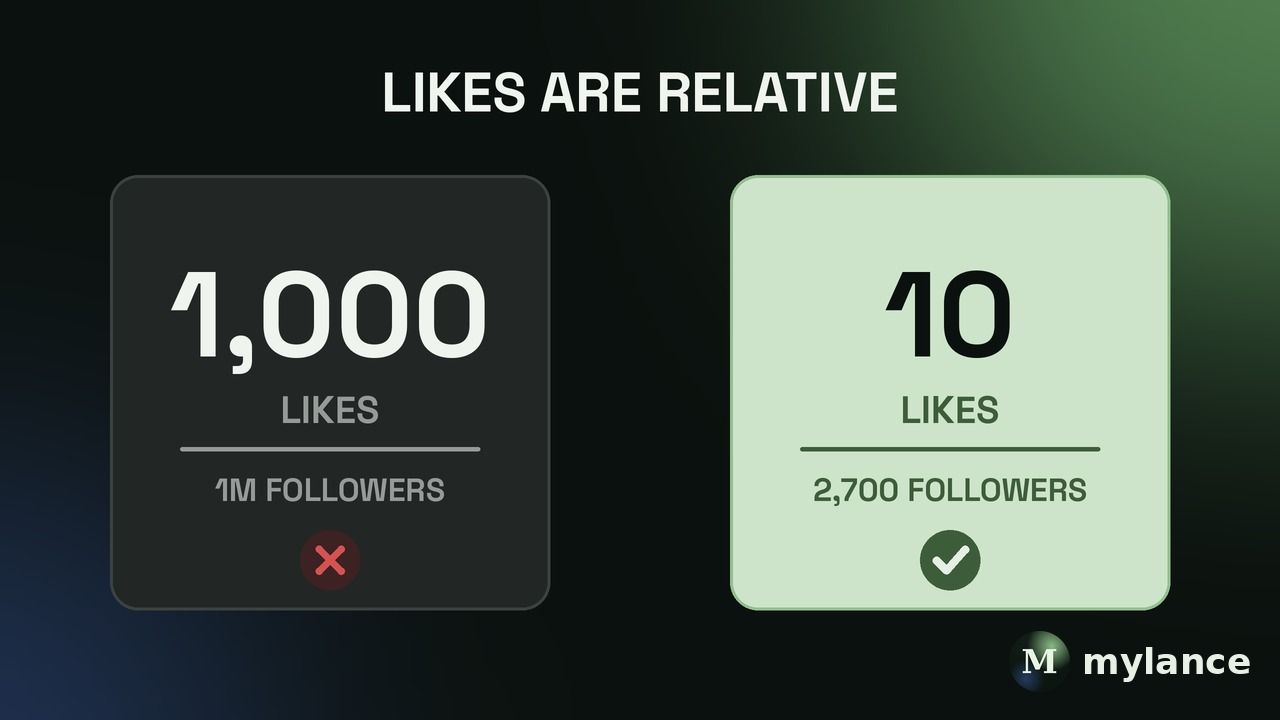
- We compared every post only to its own author. A post's score is its engagement (likes, comments, shares) divided by that creator's median post. A 500-follower creator and a 25,000-follower creator are each judged against themselves. "Beat" means a post landed at or above its author's median.
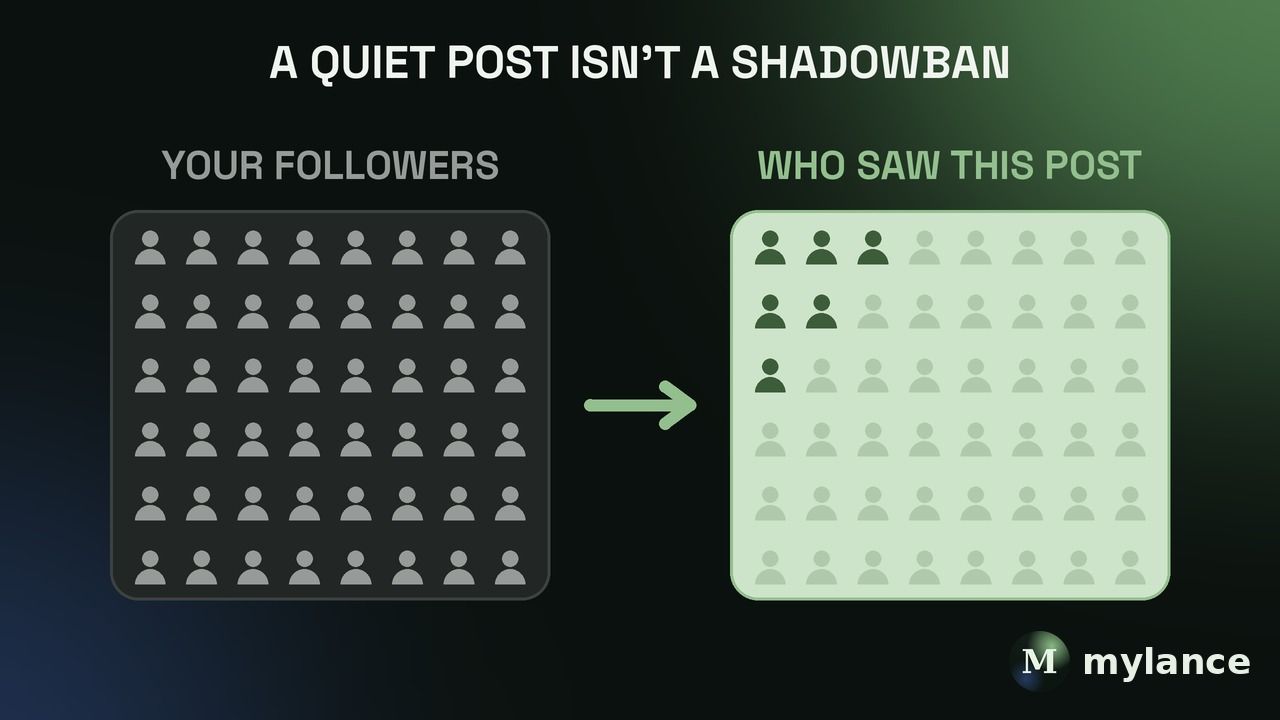
- We used engagement, not impressions. LinkedIn doesn't expose impressions through our integration, so engagement is a proxy. It sits downstream of reach, so suppression and amplification still show up, but pure reach effects are muted. We'll flag where that matters.
- We ran it two ways. First, mechanical features (does the post contain a number, a link, an image) tested against real outcomes. Second, an AI judge scored every post 1 to 5 on quality dimensions, blind to how it performed, and we correlated those scores to reality, with a held-out split so the pattern had to survive on creators the analysis never saw.
Confidence tags: HIGH (held out or replicated), MEDIUM (significant but single-method), DIRECTIONAL (small sample or qualitative). Honest limits are at the end, and they matter.
The big picture: craft helps, but less than you would hope
Every quality dimension the AI judged correlated positively and significantly with real engagement, and the signal survived the held-out split. So craft is real, not noise. But the effect sizes are modest. A quality score explains only a slice of who wins; the rest is audience-fit, timing, luck, and network effects that live outside the words.
The practical takeaway: treat writing advice as coaching that improves your odds, not a formula that guarantees a hit. Pushing the validated levers reliably makes a post sharper. It doesn't promise a home run. Anyone selling you certainty about LinkedIn is selling.
What works (ranked by evidence)
Specificity beats abstraction, every time, HIGH
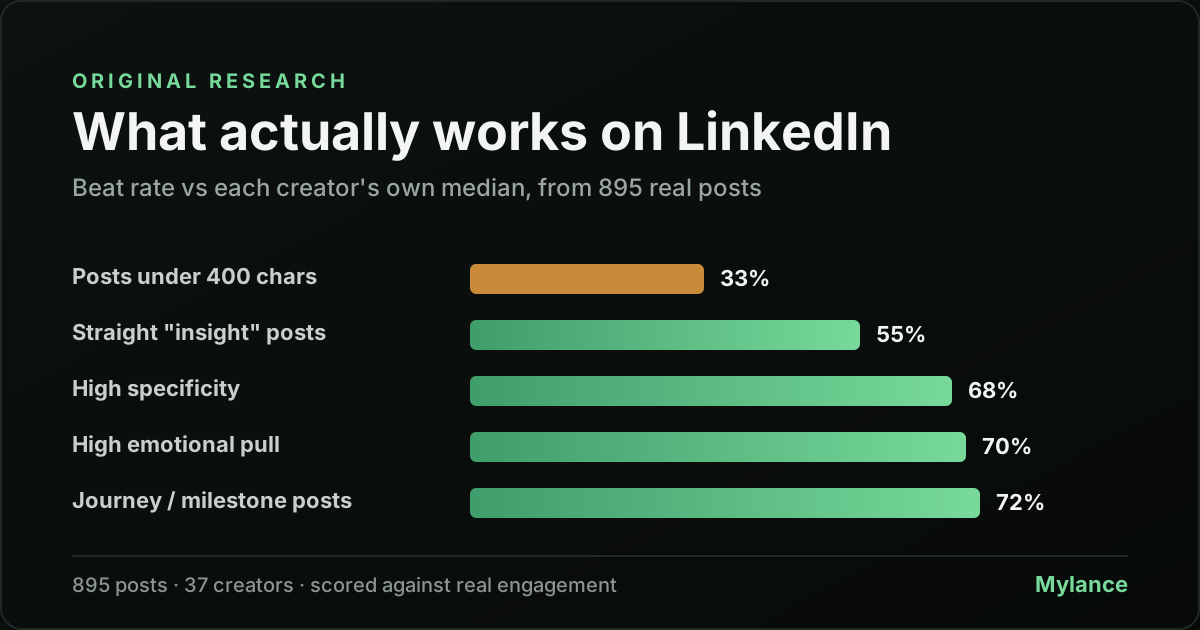
Posts high on specificity beat their baseline 68% of the time, versus about 50% for vague ones. Named companies, real numbers, concrete detail. "Booked 5 meetings in 2 weeks" beats "drive more pipeline." This one held out cleanly. If you change one thing, make your posts more concrete.
Emotional pull is the strongest lever we found, HIGH
The cleanest lift in the whole dataset: posts low on emotional pull beat baseline 51% of the time, mid 60%, and high 70%. Vulnerability, stakes, being relatable. Crucially this is a separate axis from how informative a post is. A post can be tactically thin but emotionally rich and still win. Making the reader feel something, or feel seen, isn't a nice-to-have.
Don't be short, HIGH (and it overturns the usual rule)
This is the finding that surprised us most. Very short posts (under 400 characters) beat baseline only 33% of the time, by far the worst bucket in the study. Everything from 400 characters up sits between 53% and 59%. And long posts do not underperform: posts over 2,000 characters beat baseline 59%, one of the best buckets.
So the popular "keep it short, long-form underperforms" rule is backwards. The real rule is simpler: say enough to be worth reading. Don't post a one-liner and expect it to land. (One caveat resolved below: length only hurts when a long post has no payoff.)
Add an image, HIGH
Posts with an image beat baseline 61% versus 54% without. A clean, repeatable lift of nearly 8 points. Cheap to do, so do it.
Put a number or result in the first line, MEDIUM
Posts with a number or dollar figure in the first ~160 characters beat baseline 61% versus 52%. A concrete result up top buys the read. This pairs naturally with specificity.
The engagement triggers the rubric kept missing, DIRECTIONAL
When we read the posts that beat baseline despite mediocre "quality" scores, nearly every one had at least one of these:
- A personal milestone plus a link ("so I finally built my own site, take a look") that makes the network rally.
- Tagging real people by name, which reliably pulls in engagement from those people.
- An explicit closing question or comment-bait.
- A concrete outcome and a named person in the hook ("helped her book two $15K retainers in 60 days").
- A tactical numbered list ("7 strategies", "4 hacks") with save-and-share value, which won even when the list itself was sloppy.
The formats that over-index, MEDIUM
Not all post types are equal. Beat rates by archetype:
- Journey / Milestone: 72% (the clear winner)
- Story: 60%
- Confession: 59%
- Contrarian: 57%
- Insight: 55%
- Client story: 55%
- Promotional: 52%
- Question: 50%
- Community: 50%
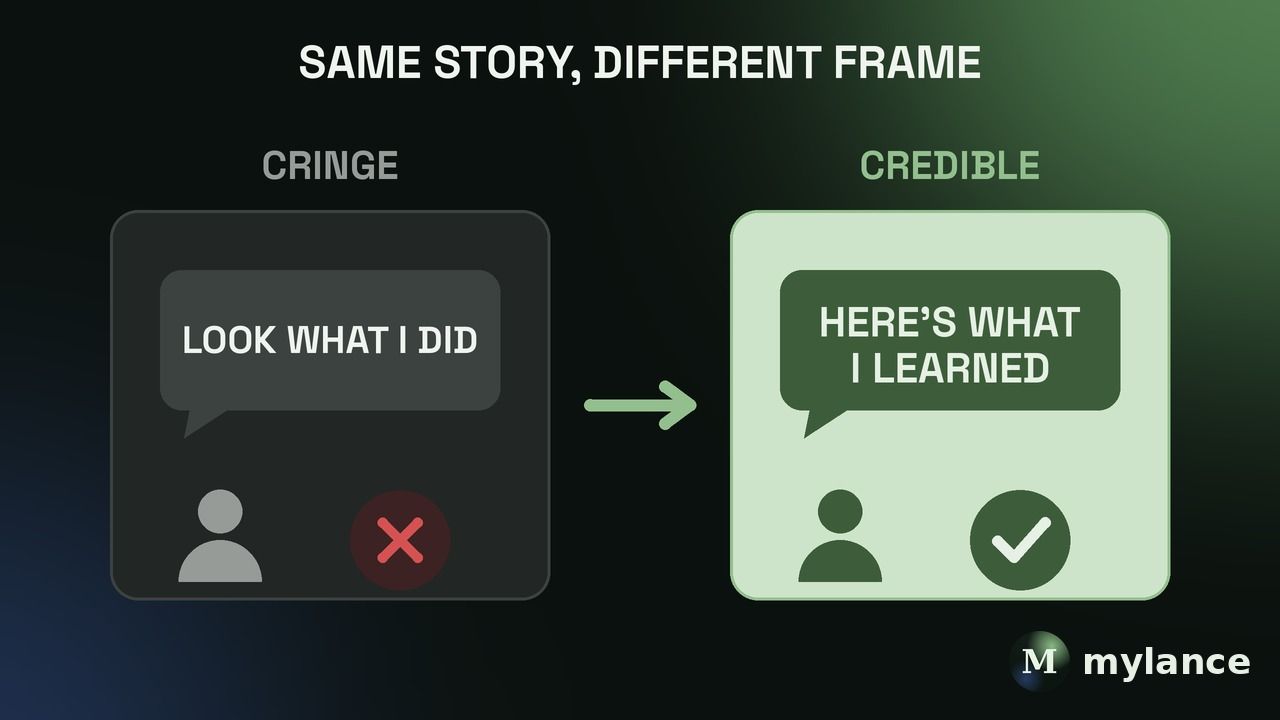
Personal-arc and emotionally loaded formats beat expertise-dump formats. The lesson isn't "never teach." It's that a lesson wrapped in a real story beats the same lesson delivered as a lecture.
What doesn't work (ranked by evidence)
A link in the post body, HIGH
Posts with an external link in the body beat baseline 41% versus 56% for posts without. Even on our engagement proxy, where this effect is muted compared to what it does to reach, links in the body drag performance down hard. Put the link in the first comment. This is the most actionable fix on the list.
Promotional and hard-CTA framing, MEDIUM
Promo-flagged posts beat baseline 53% versus 56%, and Promotional is the weakest-performing real archetype at 52%. Announcement framing dampens a post even when the underlying story is good. Sell by being useful, not by declaring that you're selling.
Polished but stakes-free, the most overrated trait, DIRECTIONAL
This was the AI judge's single biggest error: over-crediting clean, well-structured posts that simply don't land. We found 67 posts the judge scored 4 or 5 out of 5 that then performed below half their author's baseline, more than twice the number of underrated winners. The recurring flop patterns:
- Dense jargon essays that read like a whitepaper to an audience of dozens.
- Generic "executive wisdom" with no named person, no number, and nothing at stake.
- Right post, wrong audience, a hyper-specific B2B topic dropped into a general feed. Nobody there cares, so it flops regardless of how well it is written.
- Abstract self-help platitudes.
- Walls of 8 or more hashtags, a tell of reach-chasing that doesn't work.
The uncomfortable lesson: the biggest risk to your writing isn't being sloppy. It's being competent and forgettable.
"Always end with a question", NOT supported here (open question)
The old rule says a reader-directed close drives engagement. In our data, posts flagged with a reader-close beat baseline 52% versus 56%, mildly negative. Yet qualitatively, explicit comment-bait questions were common among winners. The likely reconciliation: the flag also caught weak, rhetorical closes, and genuinely strong posts often don't need a CTA. We are flagging this as unresolved rather than pretending it is settled. A real question earns its place; a reflexive one doesn't.
Timing and format, at a glance
- Has an image: 61% vs 54% (HIGH)
- Link in body: 41% vs 56% (HIGH)
- Under 400 characters: 33% (HIGH, the reliable killer)
- Over 2,000 characters: 59% (HIGH, long is fine)
- Number or $ in the hook: 61% vs 52% (MEDIUM)
- Best days (Tue, Thu, Sun): 58 to 62% (DIRECTIONAL, small sample)
- Worst day (Sat): 41% (DIRECTIONAL, small sample)
The finding nobody wants to hear: craft can't separate two similar posts
Here is the most humbling result. Quality scores predict performance across post types, but are nearly blind within the biggest one. Among 432 "Insight" posts, the correlation between the AI's quality score and actual performance was +0.02, statistically nothing. In other words, we can tell that emotional, specific types of posts win. We largely can't tell a great insight post from a mediocre one by craft alone.
That's why we anchor everything on real outcomes instead of a rubric's self-assessment, and it is why a good LinkedIn tool should coach you toward the validated levers rather than pretend it can score your genius.
The honest limits (please read these)
A study you can't poke holes in is usually hiding them. Here are ours.
- Engagement is a proxy for reach, not reach itself. The true size of the link penalty and promo suppression is understated here, because we can't see impressions.
- 37 creators, and the corpus leans toward B2B "Insight" posts. Patterns for rare formats (Humor, Confession, Question) rest on small samples.
- This is observational, not causal. These are correlations from history, not a controlled experiment. They tell you where to place your bets, not what will definitely happen.
- The junk filter is leaky. Roughly 1% of posts were gibberish or test data that slipped through, which mildly inflates the headline correlations. A stricter rerun may nudge the modest effect sizes down slightly.
None of this changes the direction of the big findings. It just means you should treat them as strong priors, not laws.
What this means for your next post
If you want a checklist you can actually use before you hit publish:
- Be specific. One real number, one named thing, one concrete detail beats a paragraph of abstraction.
- Make them feel something. A stake, a fear, a win, a moment of being seen. Emotion is the strongest lever we measured.
- Say enough. Don't post a one-liner. Length isn't the enemy; emptiness is.
- Lead with a result. A number or outcome in the first line buys the read.
- Add an image. Nearly a free 8-point lift.
- Move the link to the comments. The single biggest quick fix.
- Tell it as a story, not a lecture. Journey and confession formats beat expertise dumps.
- Kill the polish that hides the point. If there's no named person, no surprising number, and nothing at stake, no amount of clean structure will save it.
Want to see how your own drafts score on these levers? Run one through our free LinkedIn Post Grader, which checks a post against the exact findings above in seconds.
Where this came from, and where it goes
This isn't theory for us. This evidence is the foundation of how Mylance works: our system is built to push you toward the levers that actually predict performance, specificity and emotional pull, instead of the polish that only looks good. It starts from your real positioning and stories and helps you turn them into posts that sound like you and earn attention, in your own voice.
The cite-ready stats and one-line findings live at mylance.co/linkedin-engagement-statistics. We'll refresh these numbers as the dataset grows so this stays a living benchmark rather than a one-time snapshot.
Keep reading: The LinkedIn Algorithm in 2026: What 895 Real Posts Show · How to Write a Viral LinkedIn Post (700K Views, Broken Down)
Mylance
Your LinkedIn should be working for you: visibility in your voice, a habit you will keep, compounding with every post. Mylance makes that happen. See how it works →
Frequently asked questions
Does post length matter on LinkedIn?
Yes, but not the way most advice claims. In our study of 895 posts, very short posts (under 400 characters) were the worst performers, beating their author's baseline only 33% of the time. Long posts (over 2,000 characters) did fine at 59%. The real rule is to say enough to be worth reading, not to keep it short.
Do links hurt your LinkedIn reach?
In our data, posts with an external link in the body beat their baseline 41% of the time, versus 56% for posts without a link. That's a large penalty even on an engagement proxy, where the effect is muted compared to reach. The fix is simple: put the link in the first comment instead of the post body.
What actually drives LinkedIn engagement?
The two strongest, held-out levers in our study were specificity (concrete details, real numbers, named things: 68% beat rate when high) and emotional pull (vulnerability, stakes, relatability: 70% beat rate when high). Polish and clean structure correlated far more weakly. Format matters too: personal Journey and Milestone posts beat baseline 72% of the time.
What is the best type of post to write on LinkedIn?
By beat rate, personal-arc formats won: Journey/Milestone posts (72%), then Story (60%), Confession (59%), and Contrarian (57%). Straight expertise dumps ("Insight" posts) landed at 55%, and purely promotional posts were the weakest real format at 52%. Wrap the lesson in a real story rather than delivering it as a lecture.