
Mindset
AI Can Copy Your Skills. It Can't Copy This.
August 5, 2026 · Bradley Jacobs
Get your free LinkedIn positioning in 60 seconds — drop your handle:
There's a word for the thing that makes you impossible to replace, and it's probably not in your vocabulary.
The word is hunar - Persian in origin, common in Hindi and Urdu, sitting somewhere between mastery and artistry. It isn't talent. It isn't skill. It's the third thing, the one that turns competent work into work that could only have come from you.
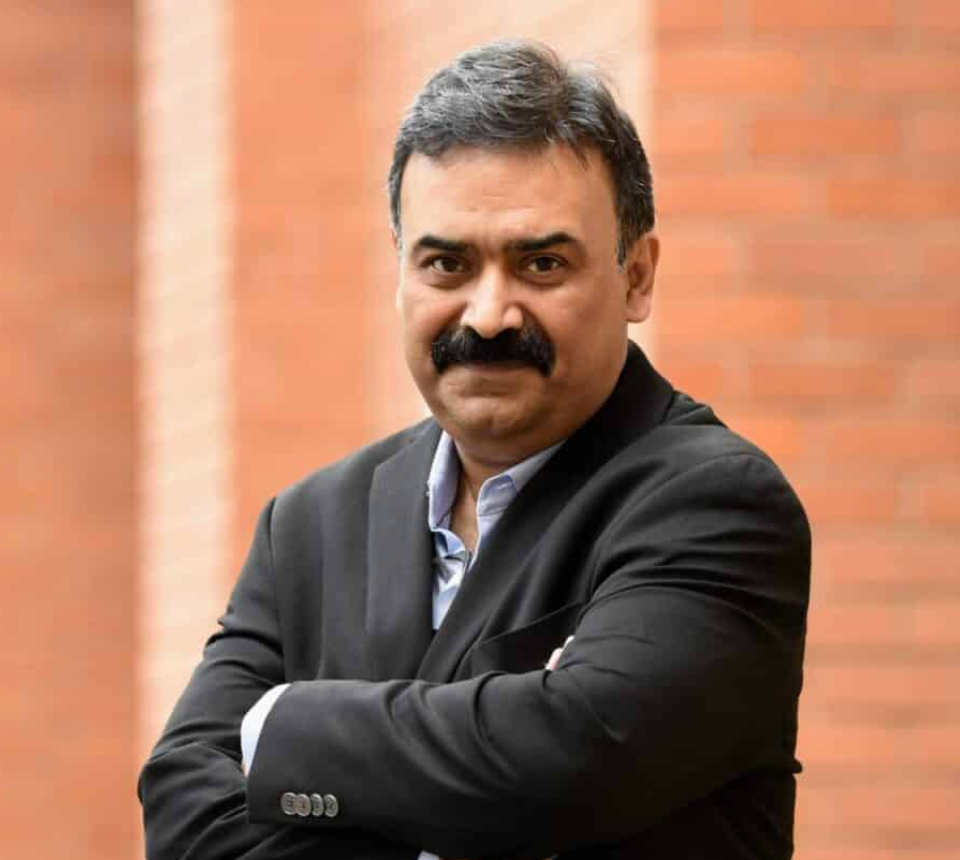
Abhijit Bhaduri has spent a career at the intersection of talent and human potential - learning and leadership development at Colgate, Pepsi, and Microsoft, Wipro's first Chief Learning Officer, six books, nearly a million followers on LinkedIn. He's now writing one called AI Identity about what happens to professional identity when the machine can do the work.
For fractional executives, the argument lands hard. You sell expertise. The machine is getting very good at expertise.
Talent, Skill, and the Third Thing
Start with the distinctions, because most people collapse all three into one word and then wonder why they feel stuck.
Talent is what you were born with - the kid reading novels while classmates sound out vowels. A head start, nothing more.
Skill can be watched, taught, benchmarked, and copied. Bhaduri is blunt about the hierarchy: the person who puts in the hours and endures the repetition eventually overtakes the naturally gifted person who didn't. That's just how it works.
Hunar is what happens when your life experiences, relationships, disappointments, and the books and music you've absorbed all get poured into the work. It's the unsigned painting everybody can identify anyway. You know a Picasso. You know a Dalí. Same methods available to everyone; only one name comes to mind.
Why Alfred Hitchcock Was Afraid
Bhaduri's favorite illustration is Hitchcock, and the story is worth the detour.
As a small boy, Hitchcock did something his father disapproved of. The father handed him an envelope and told him to walk it to the police station and give it to the man at the front desk. Little Alfred did. The officer read the letter, took the boy by the arm, put him in a cell, and shut the door for ten minutes of this is inevitable and I can do nothing. Then he let him out with a lecture about listening to your elders. What the father actually installed was a lifelong understanding of dread and a permanent hatred of authority.
Watch what Hitchcock does with it. Conventional suspense shows the threat approaching. Hitchcock tells you what's coming and makes you die a hundred deaths waiting. In Psycho, the knife never touches skin. The horror happens entirely inside your head.
Other directors studied the technique. Seventy shots in the shower scene - you can count them, you can copy them. What they couldn't copy was the ten minutes in the cell.
The Machine Can Do the Task. It Can't Do the Judgment.
Here's where this stops being a nice idea and starts being your business model.
AI can steal your skill. Bhaduri says it plainly, without hedging. You spent years learning accounting; the machine does accounting. That's not a threat on the horizon - it's Tuesday. What it can't do is the human layer sitting on top of the work.
A machine can scan a stack of x-rays and correctly flag the malignant tumor. It can't decide how to tell the patient, or read the family in the room and conclude that today isn't the day. That judgment - the holding back, the timing, the read on another person - is hunar.
Every recipe on earth is online. Why isn't everyone a Michelin-star chef? Because someone holds the caramelization a second longer. That second is the whole thing.
The Industrial Era Trained You to Sand This Off
Understand what you're actually fighting. The industrial era ran on interchangeability. Products had to be interchangeable, which meant the people on the line did too. If your skill was meaningfully better than mine, it showed up in the product and broke the system. So you toned it down, I brought it up, and we met at the standard.
That logic produced everything we still worship: benchmarks, credential requirements, "five years of experience plus a degree in this and three in that." It also handed your identity to your employer. Manager. VP. Bhaduri connects it to something uncomfortable - the mental health toll of forever straining toward an invisible standard that always says you're not good enough. And it's already obsolete. What credential does anyone hold for "I can use AI well"? None. They just can.
Every fractional executive has felt this. When you leave the big logo, the first response is never heard of that firm. But identity stops being the business card and becomes your expertise, what you stand for, and the particular way you do it. Not just what you do - the how. That's the entire asset.
Where to Go Looking
If you're thinking I don't know what my hunar is, that's the normal starting position. Bhaduri's approach with the founders he coaches is to stop treating work as a sealed container.
Raid your hobbies. He'd written two novels before his corporate career, so at Wipro he brought storytelling into a B2B IT services sales team - in 2009, when the response was "we're serious people, we sell IT services." He took the group to meet actual writers, then made them tell customer stories with stakes: twelve days left, running out of cash, racing the clock. Nobody buys 30 million in turnover. People buy stories.
Raid your relationships. Not your network - the people you've simply enjoyed being around who have nothing to do with your profession.
Raid your history, including the parts you'd rather not. One founder he coaches grew up in extreme poverty, so the coaching question becomes: how has that shaped the way you think about money? No two people see the same hundred-dollar bill.
Here's the relief hiding inside the idea. Most of us treat what happened to us as damage requiring repair - something to overcome before the real work starts. Bhaduri flips it. The disappointments and strange detours aren't obstacles to your differentiation. They are your differentiation. You don't need to try to be different. You already are.
The Photograph
Bhaduri points to Roger Federer, and it isn't the obvious reason.
Federer didn't start as a tennis player. He ran track, played basketball, wrestled - a half-dozen sports he later said built the strength and vision he eventually brought to the court. Not isolated events outside the job description. They went into the blender.
The result: Agassi, Nadal, and Djokovic all said versions of the same thing - he made us play a game we never experienced against anyone else.
Which brings you to the photograph from his final match. Nadal is crying, and he isn't embarrassed about it. Think about how strange that is. When a rival exits the arena, you exhale - one less problem. Instead his competitors were grieving, because they'd never get to play that game again.
Every one of those men had the talent. Every one had the skill. The thing that made grown rivals weep was the third layer.
You have competitors too. And in a world where anyone can ship a CRM in a weekend, the CRM isn't your differentiator - the thoughtfulness, the niche, the point of view baked into every screen is. Which means there's a vulnerability built into all of this. You can't launch something separate from who you are anymore. Your essence has to come through the product, the service, the way the company runs.
That's the cost. It's also the moat.
Bhaduri's one thing for founders: stop operating like it's the industrial era, straining to be almost like someone else, living up to a benchmark. Be yourself. It's the only thing left that can't be recreated.
Mylance
Your LinkedIn should be working for you, attracting clients, building credibility, and compounding with every post. Mylance makes that happen. See how it works →