Find Clients
The Real Reason Your Dream Clients Aren't Calling (And the 9-Stage System to Fix It)
December 3, 2025 · Bradley Jacobs
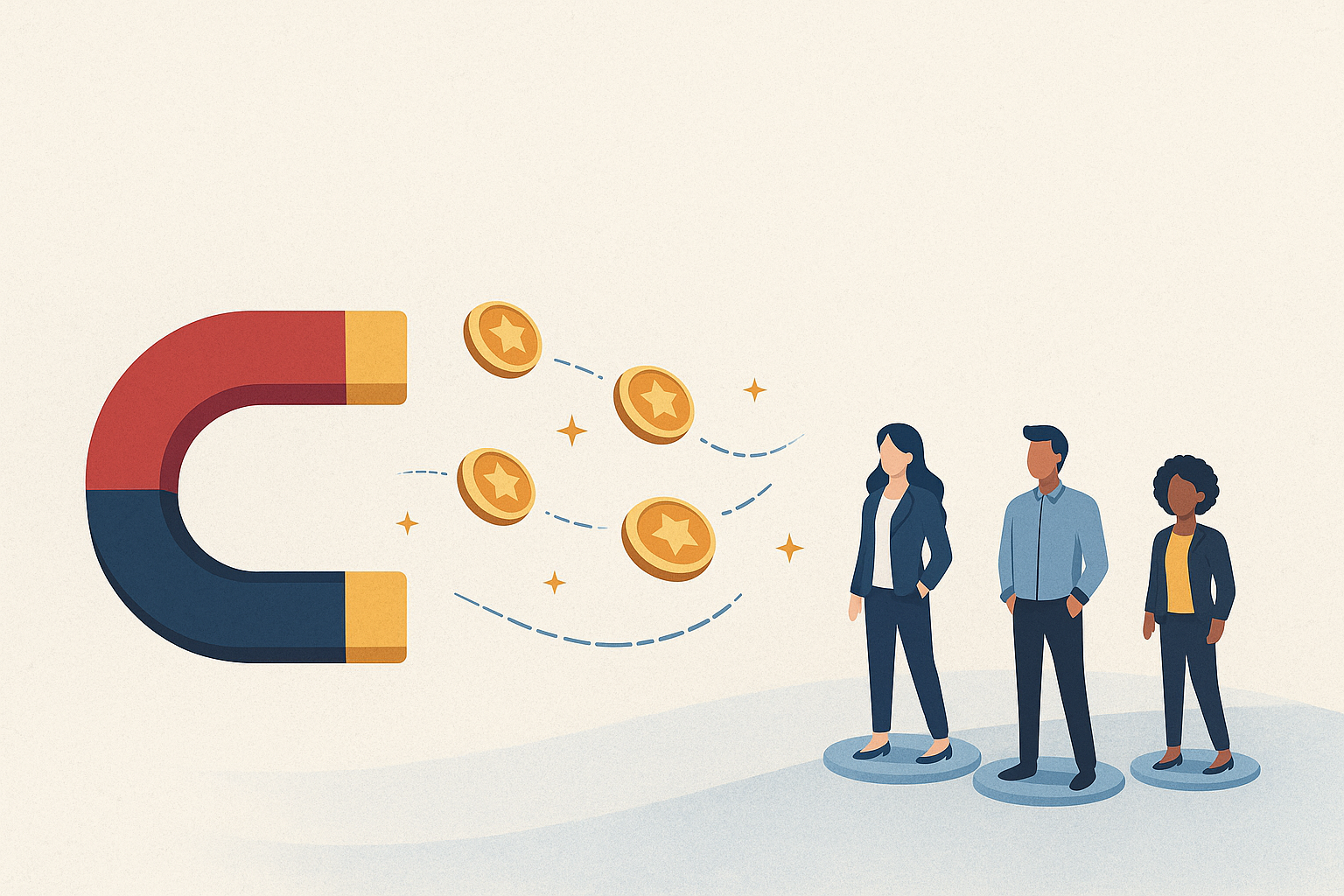
You're putting yourself out there. Posting on LinkedIn. Maybe even networking. Yet somehow, those high-value clients you want to work with just... aren't materializing.
Here's the uncomfortable truth: You're probably showing up in all the wrong ways at all the wrong times.
Most fractional executives approach client acquisition like throwing spaghetti at the wall. Post something when you feel inspired. Show up to a networking event when it's convenient. Hope someone who needs exactly what you offer happens to stumble across you at exactly the right moment.
That's not a strategy. That's a prayer.
And prayers don't fill pipelines.
What you need is a clear understanding of what your buyer is actually experiencing from the moment they've never heard of you to the moment they sign your proposal. Then you need to map your entire presence to that journey.
Let's break it down.
The 9 Stages Your Buyer Goes Through (Whether You Know It or Not)
Stage 1: The Flicker
Your ideal client sees your name in a comment on a LinkedIn post. Or a colleague mentions you in passing. Maybe they scroll past something you wrote without really noticing it.
Their internal dialogue? "Who's this? Never seen them before. Not important."
This isn't personal. They're overwhelmed and busy. You're just background noise. And that's fine - this is how it starts for everyone.
Stage 2: Weak Recognition
They see you again. Another post. Another mention. Someone shares your content or replies to your comment.
Now there's a tiny spark of familiarity forming. "I've seen this before. They're talking about the same thing." But they're still not interested. You're not random anymore, but you're also not on their radar as someone who could solve their problems.
Stage 3: Micro-Curiosity
Something breaks in their business. They miss a target. Feel stuck. And they think back to something you were talking about that relates to their problem.
So they check out your LinkedIn profile. Skim a few posts. Maybe glance at your website and leave the tab open... then completely forget about it.
Their internal questions: "Do they actually work with companies like mine? Can they get results? Is this legitimate?"
There's curiosity here, but it's still surface-level.
Stage 4: The Value Test
They see something from you that adds real value. An audit. A guide. A newsletter that addresses their specific struggle. And they think, "What do I have to lose by giving my email?"
So they do. But there's still no buying intent. They're just exploring to see if you're legit.
Stage 5: The Lurk
Now they're in your ecosystem. Skimming your emails. Reading your LinkedIn posts more carefully. Noticing patterns.
They're comparing their situation to what you solve. "Can this person actually fix my problem? Are they a good fit?" They're being warmed up, but they're not ready to buy yet.
Stage 6: The Trigger
Then something big happens. A crisis. A missed deadline. A costly mistake. A competitor beats them to market. Someone gets fired.
Suddenly, that background pain they've been tolerating? It's now urgent, expensive, and impossible to ignore.
Their internal dialogue shifts to: "I need to fix this NOW. I need someone I can trust who understands this problem deeply."
And they think of you - because you've been showing up consistently in their feed and inbox.
Stage 7: The Reach-Out
They book a call. Reply to an email. DM you. Click your calendar link. They're hoping you "get it" and wondering if it'll be a good fit.
Stage 8: The Validation Call
On the call, they're validating everything. Are you worth the investment? Will you make them look good? Is this worth the emotional and operational cost?
They're asking themselves: "Do I feel safe moving forward with this person?"
Stage 9: The Trust Decision
After the call (or sometimes during it), they're making the final call: "If I pay this person, will they deliver? Will I look good? Will this actually solve my problem?"
The decision is always emotional first, rational second. They're asking: "Does this feel right? Does this get rid of my pain point?"
What You Need to Have in Place (The 9-Stage System)
Now that you understand their journey, here's what needs to be in place on your end:
Stage 1: Presence
Show up consistently across multiple places. Daily LinkedIn content. DMs. Comments. Community participation. All with a consistent point of view focused on the specific pain points you solve.
The objective: Be visible enough that strangers can stumble into you.
And no - posting 10 or 20 times isn't enough. You need to show up every week for months on end. That's just what's required.
Stage 2: Recognition
Talk about the same problem over and over again. Use consistent language with slightly different angles. Go super deep on one topic instead of being a generalist about everything.
Repetition builds trust. Depth builds authority.
Stage 3: Your Profile (The 10-Second Test)
Your LinkedIn profile and homepage (if you have one) must immediately answer four questions:
- Who you help
- What problem you solve
- The outcome you create
- Proof you've done it
It doesn't need to be clever or fancy. It needs to be clear, concise, and legible. You've got about 10 seconds before they bounce.
Stage 4: A Lead Magnet That Actually Adds Value
Offer something valuable in exchange for their contact information. A free consultation. A newsletter. An ebook. A template. A workshop.
Whatever it is, make sure it aligns with the problem you solve. If you're a marketing analytics expert, maybe it's a guide to building the perfect dashboard. Keep it simple and relevant.
Stage 5: Clean Nurturing
Once you have their email, stay in touch. Send stories, examples, insights. No spam - just clear, value-added emails that keep you top of mind.
Always include a clear call to action so they can book a call with you when they're ready.
Stage 6: Be There When the Trigger Hits
When that crisis happens - when they finally feel the urgency - you need to be right there in their inbox or feed saying, "I've got you covered."
This is where consistency pays off. Send a weekly newsletter with a standing call to action. Keep your Calendly link visible everywhere.
Stage 7: Frictionless Call Booking
Make it stupid simple to book time with you. Use Calendly or a similar tool. Have available time slots. Ask a few qualifying questions so you can start the conversation well.
Include a thank you message that sets expectations. That's it.
Stage 8: The Sales Call (That Isn't a Pitch)
This is where most people blow it. They pitch. They present. They talk about themselves.
Don't do that.
Ask about their problem. Get clarity. Be curious. See if there's an opportunity to solve their problem.
By asking really good questions, you're doing the best "pitch" you could ever do. If you don't know how to do this, get sales training. But the fundamentals are simple: listen more than you talk.
Stage 9: Clean Follow-Up
After the call, send a summary in their words (AI can help with this). Send a proposal. Make it as easy as possible for them to say yes.
At this point, you've already built trust and legitimacy. All they're doing is saying yes to something that feels right.
The Alternative? The Pray-and-Spray Approach
Look, you can keep doing what you're doing. Posting occasionally. Showing up when it's convenient. Hoping clients magically fall into your lap.
That might work for a while. But it will almost certainly stop.
Or you can build a robust system that aligns with what the buyer journey actually looks like - and stop leaving money on the table.
Your move.
Ready to systematize your client attraction? The difference between fractional executives who consistently land high-value clients and those who struggle isn't talent or expertise - it's having a system that meets buyers where they are, every step of the way.
Mylance
Your LinkedIn should be working for you, attracting clients, building credibility, and compounding with every post. Mylance makes that happen. See how it works →